The Douglas Hyde Gallery of Contemporary Art, Dublin, Ireland, 2026
- Image Gallery [Gallery 1]
- Image Gallery [Gallery 2]
- Artwork Activation Videos
- Exhibition Opening Documentation
- Exhibition Text
- Exhibition Handout
- Commissioned Text
- Press and Media
- Production Credits
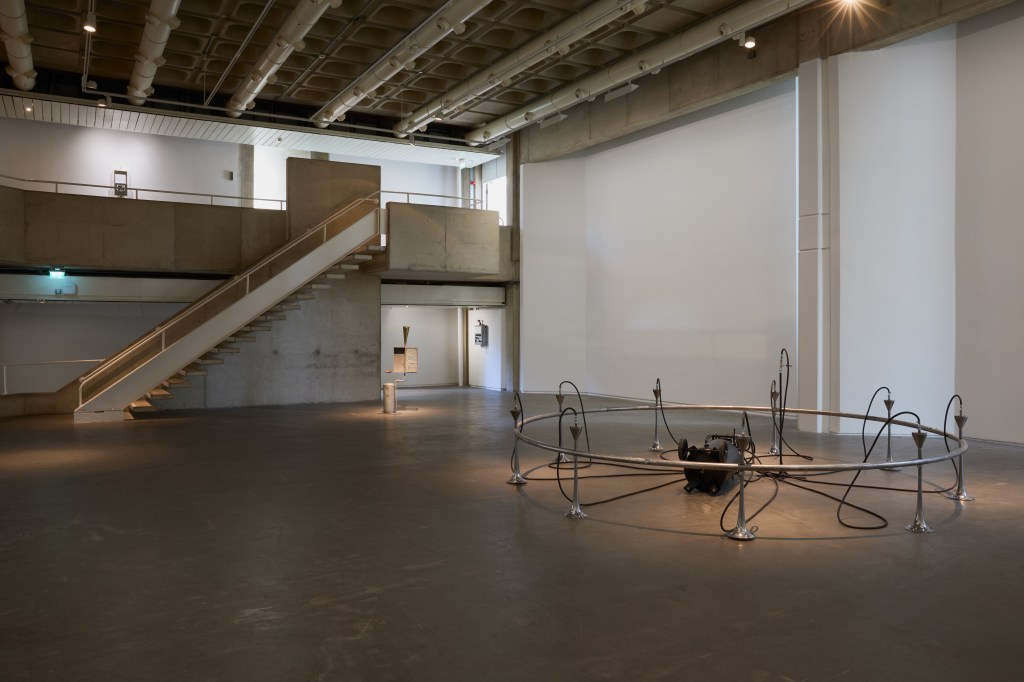
Image Gallery [Gallery 1]
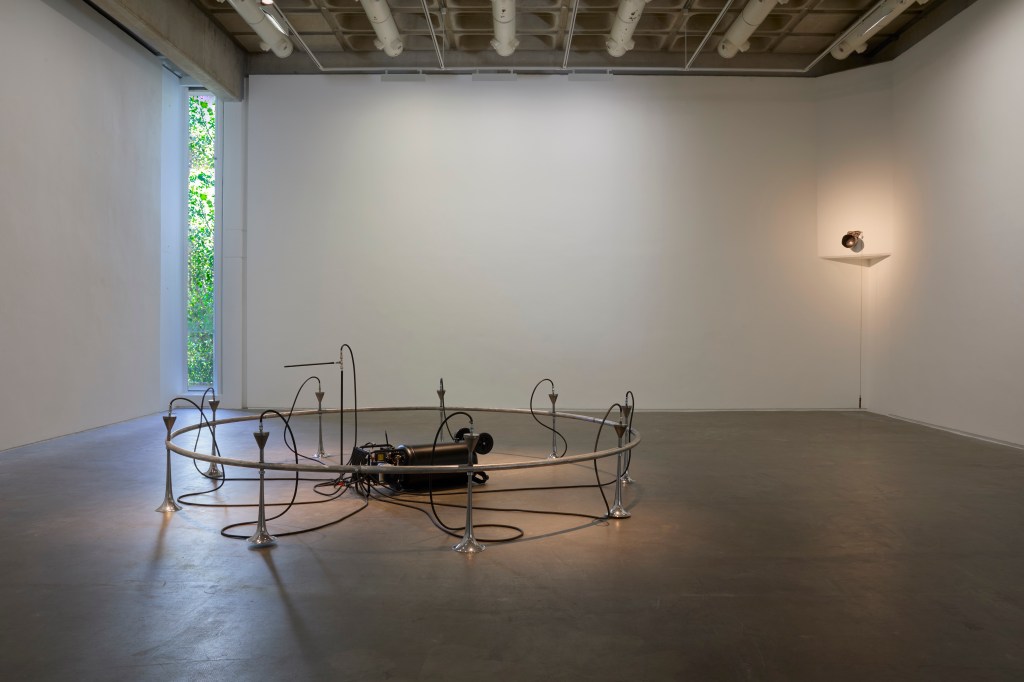

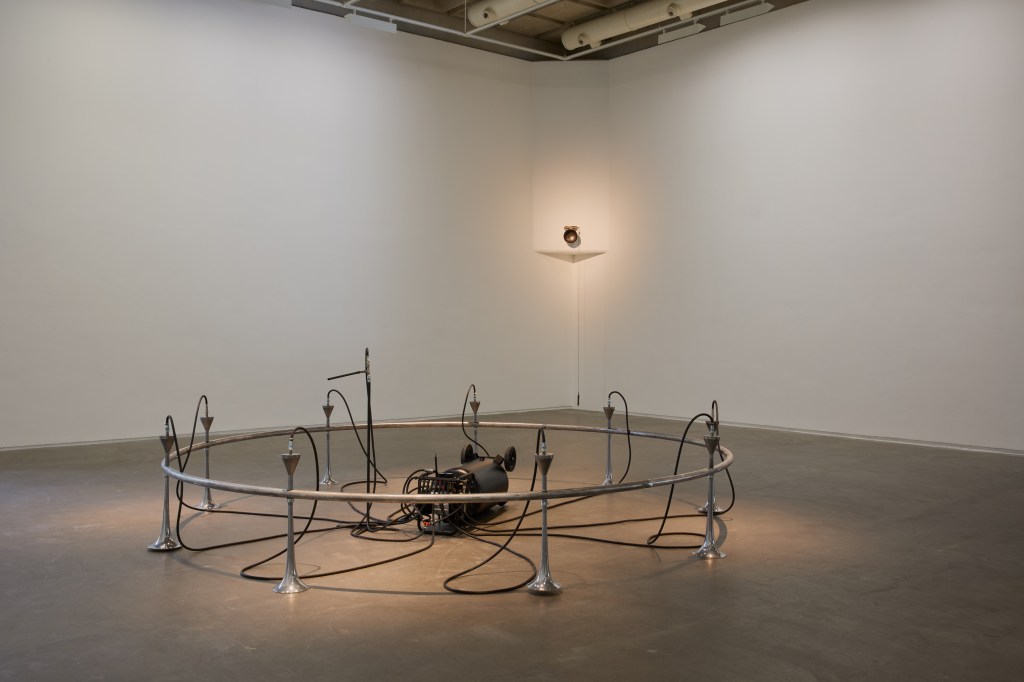
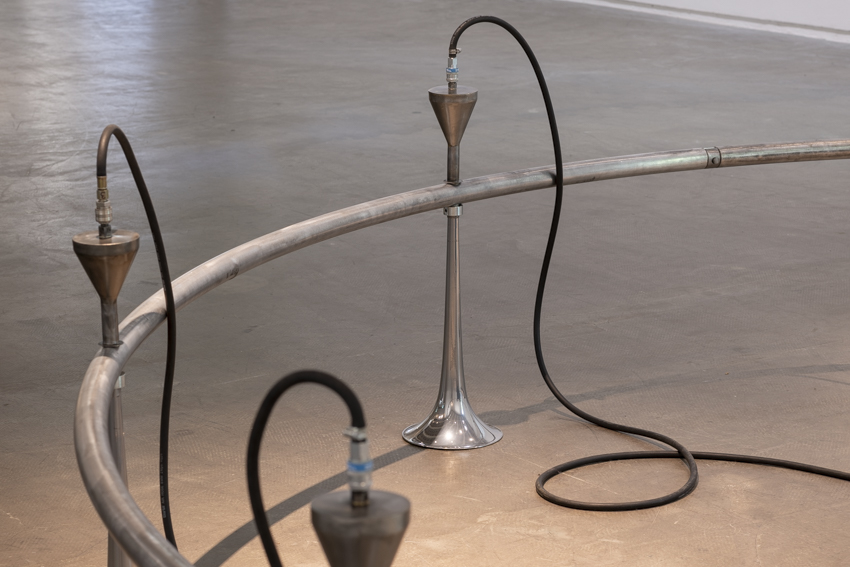


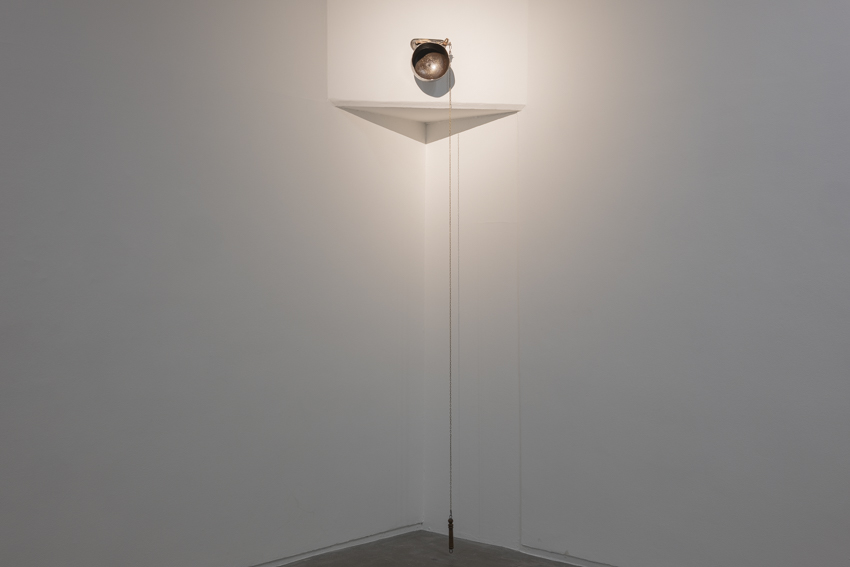

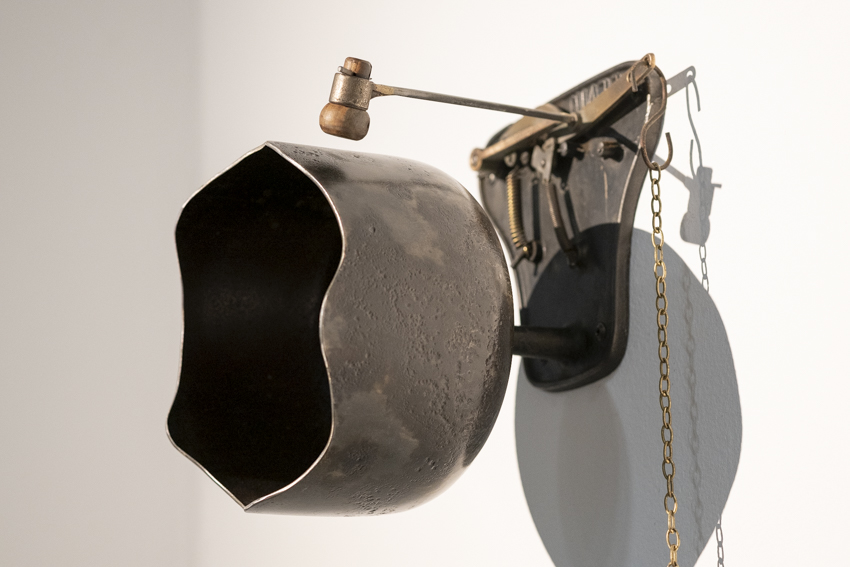
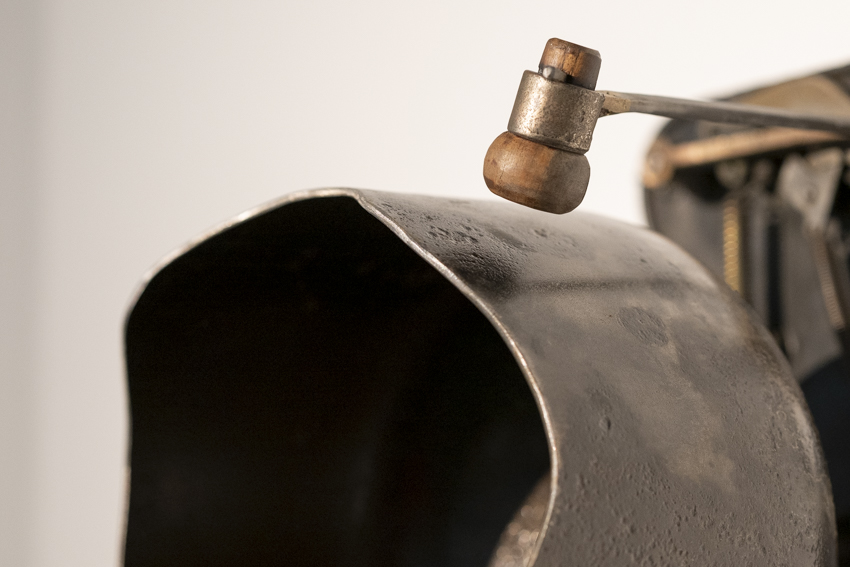
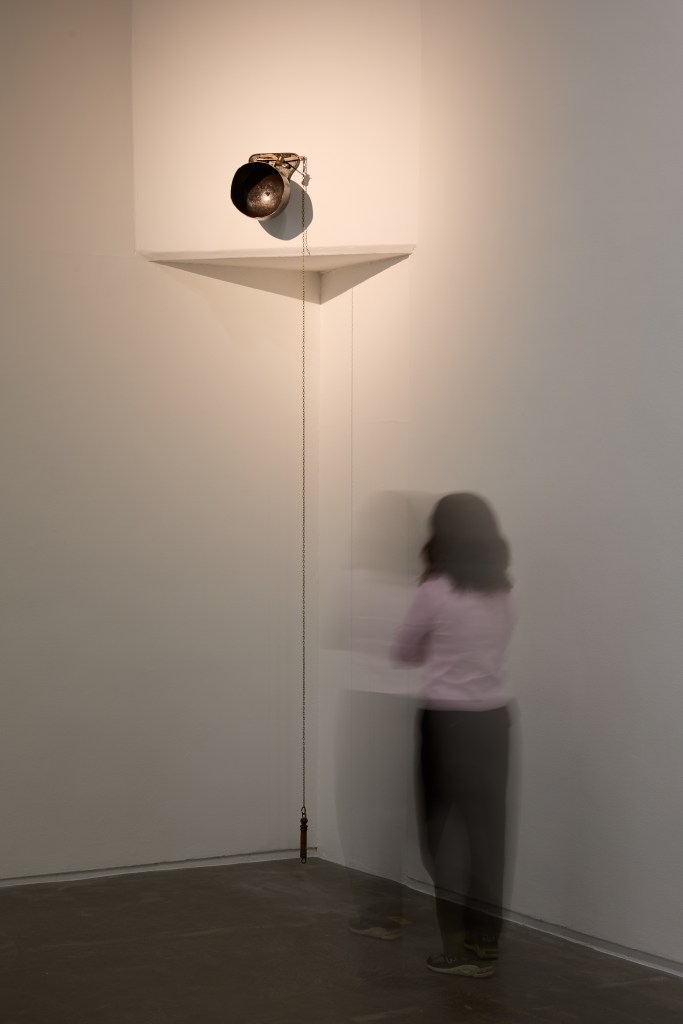
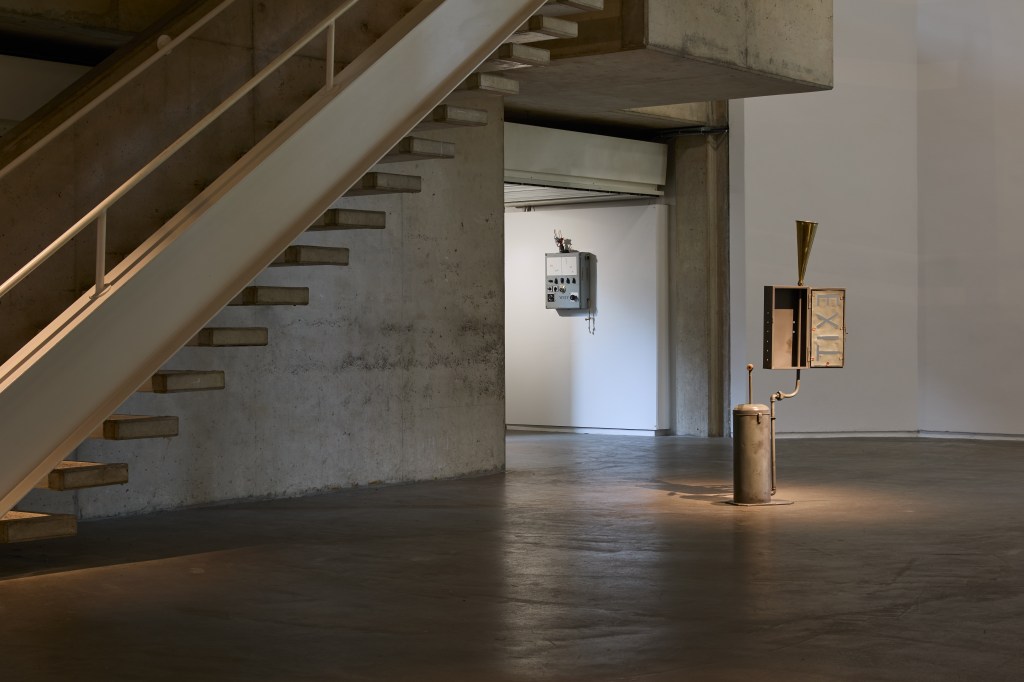


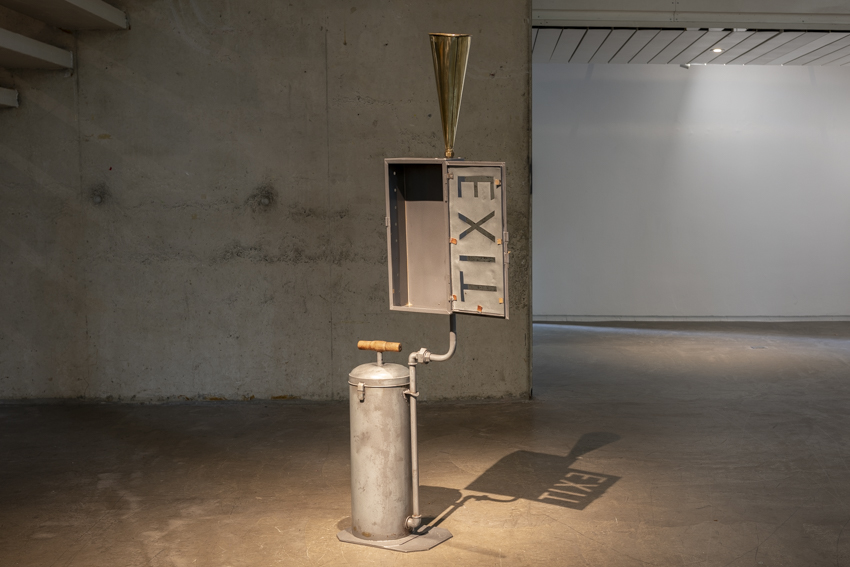

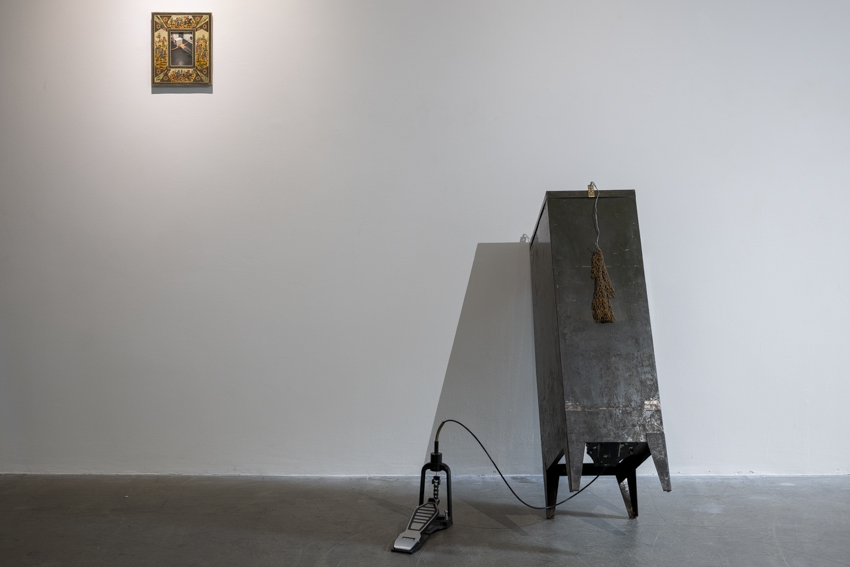
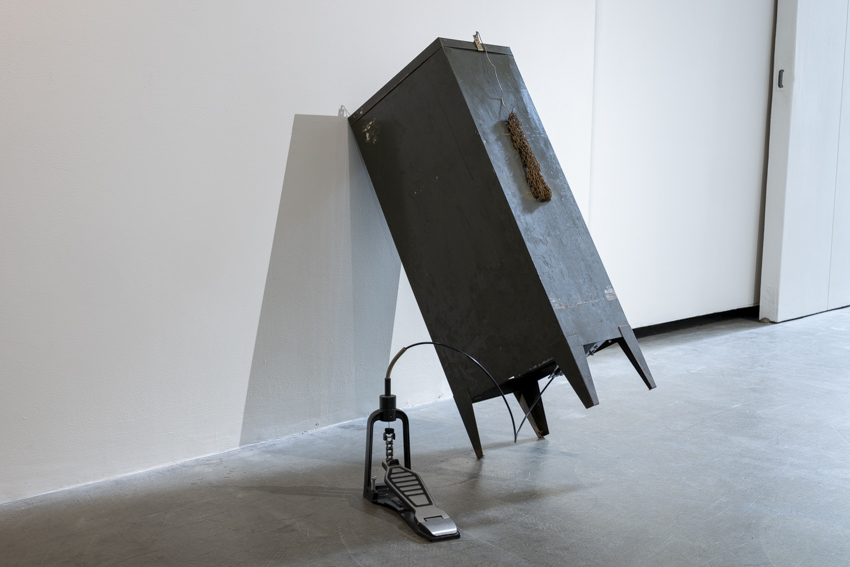
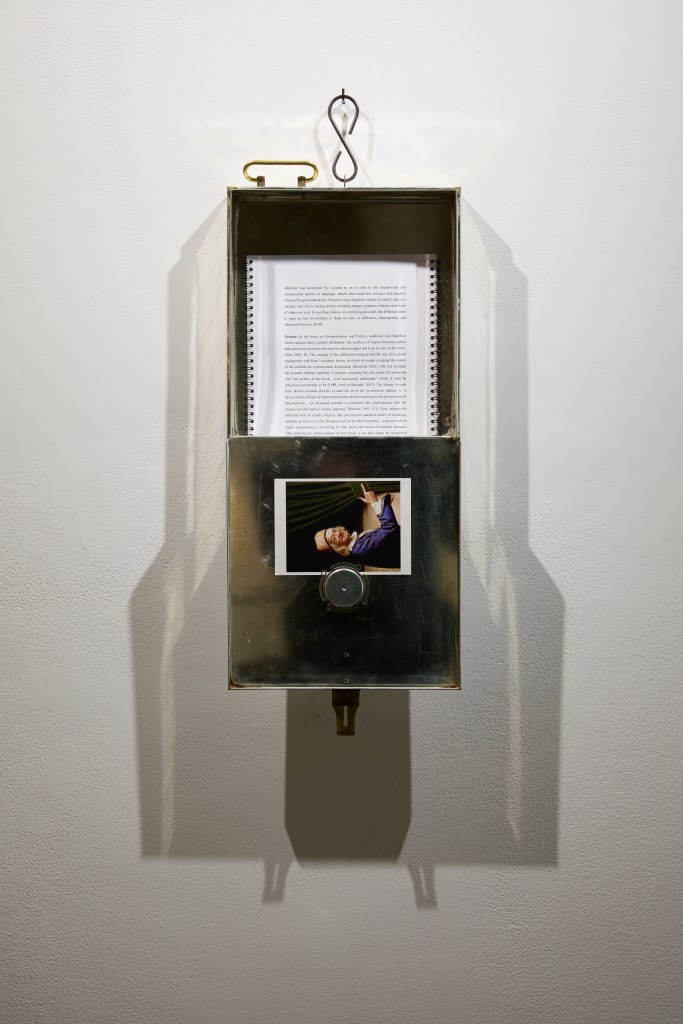
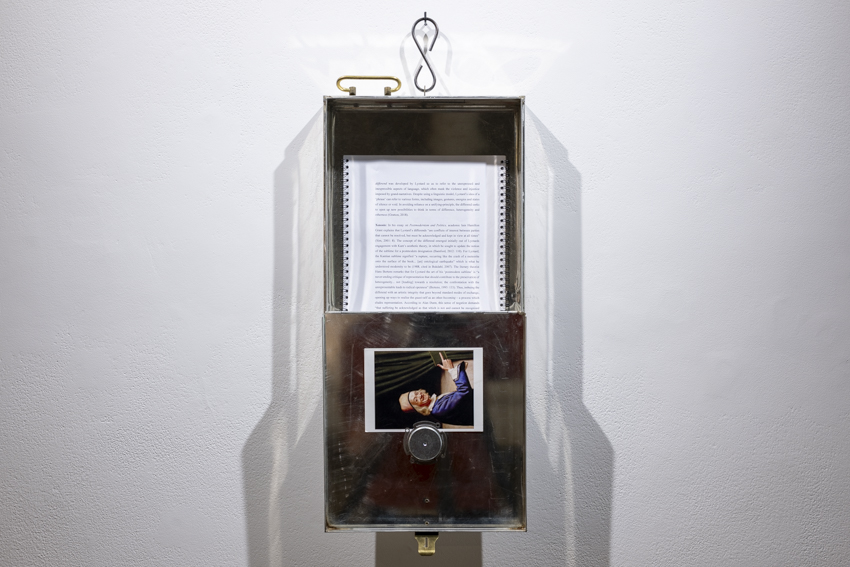
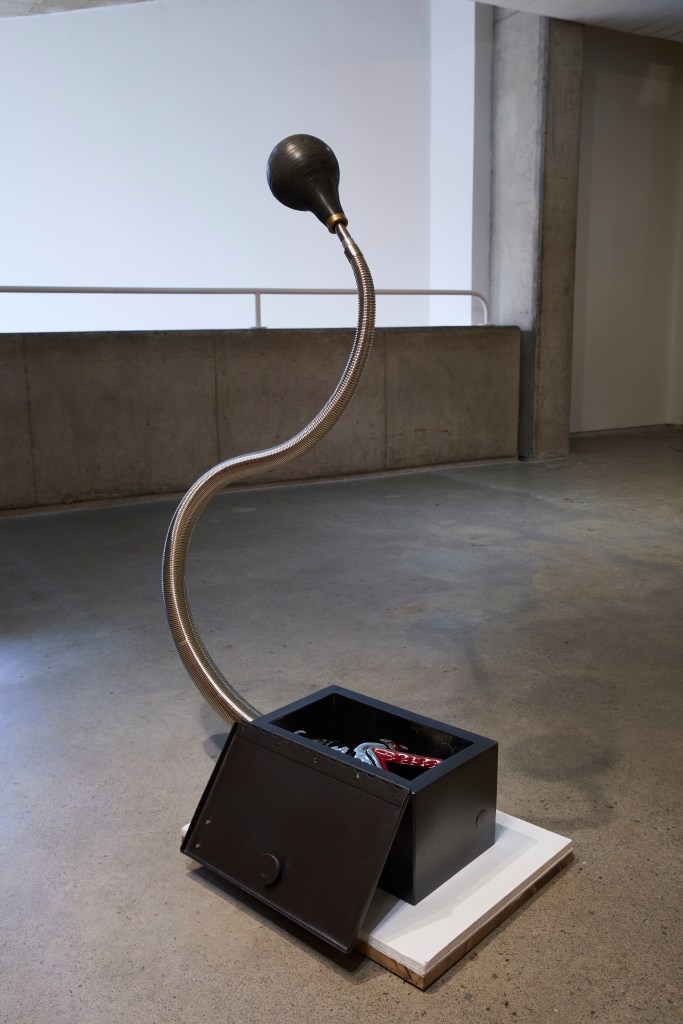
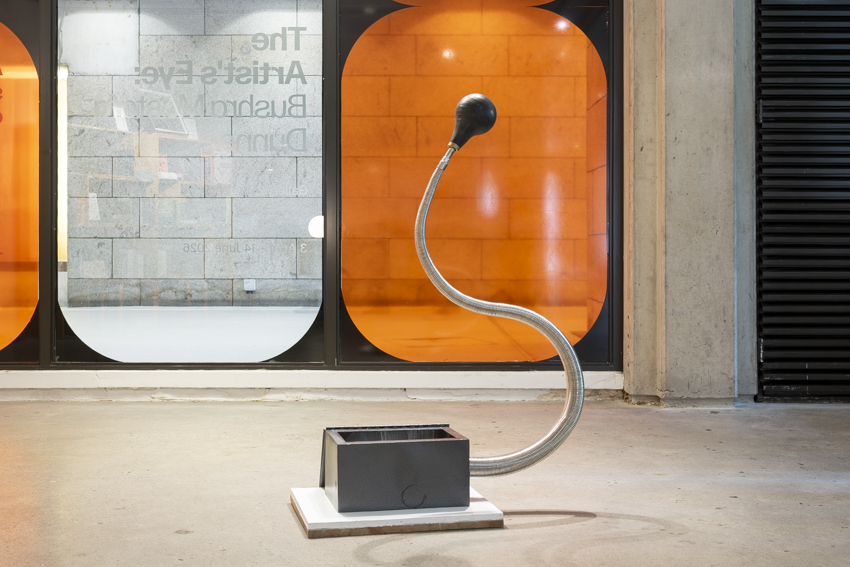

Image Gallery [Gallery 2]


Artwork Activation Videos
Exhibition Opening Documentation
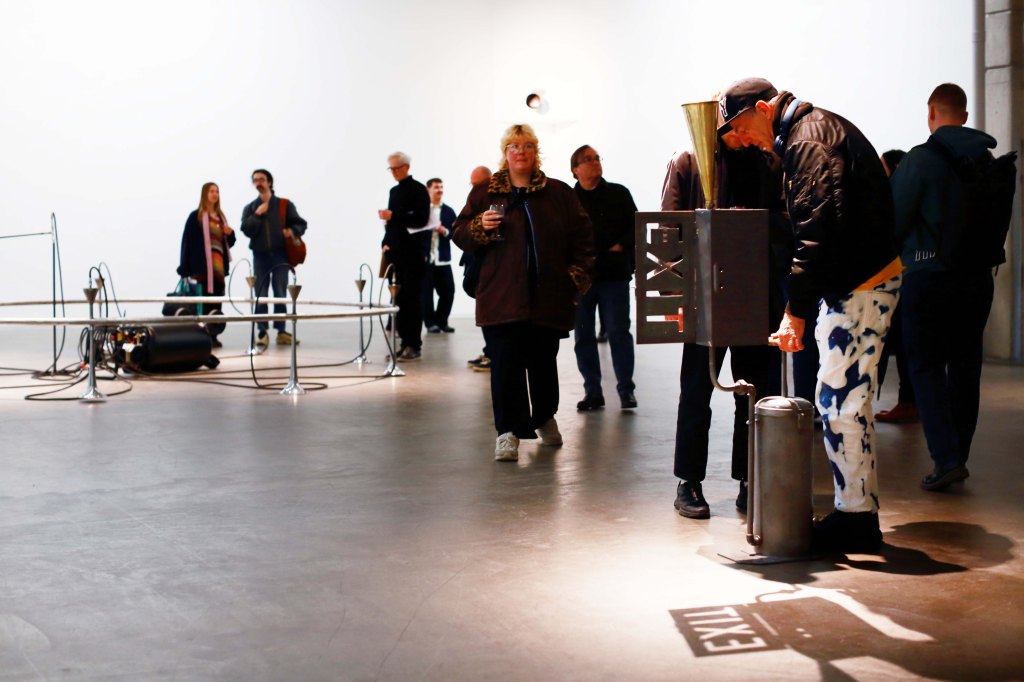
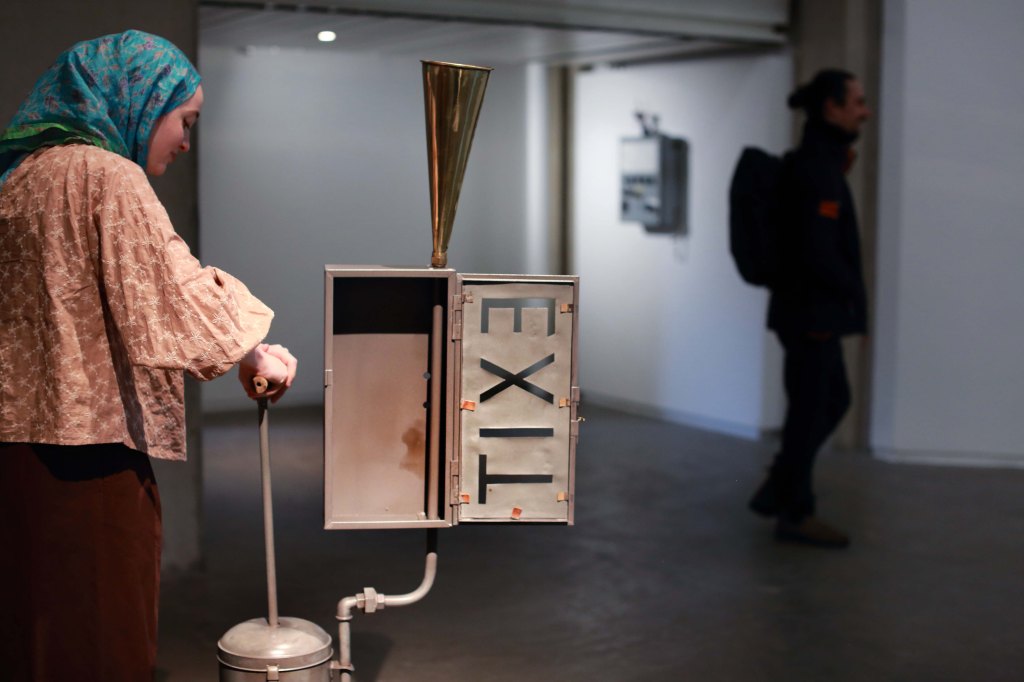
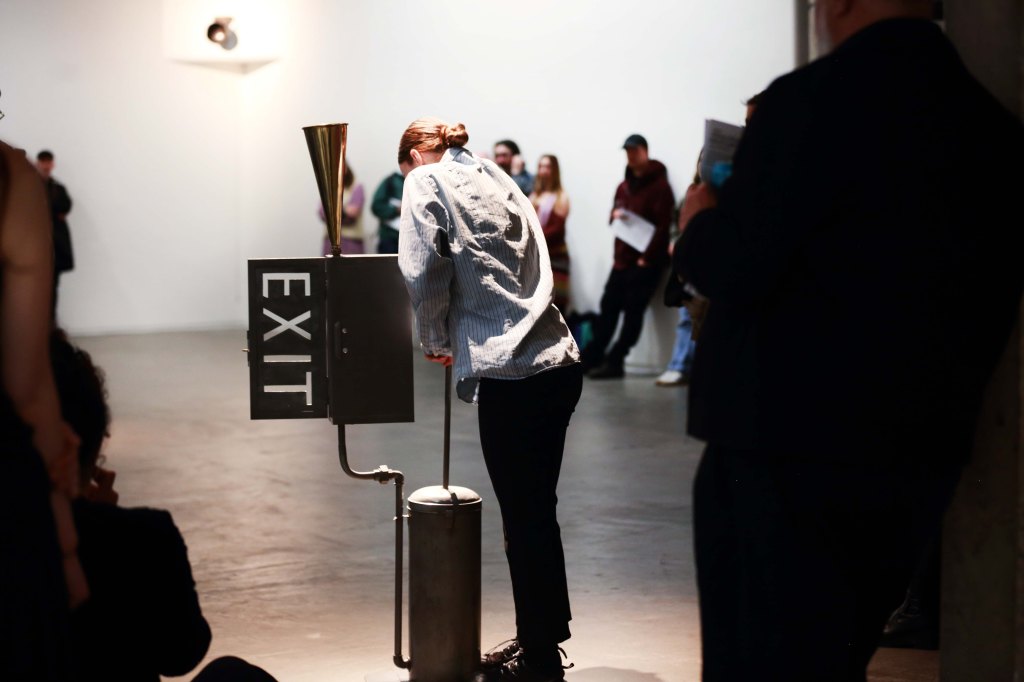
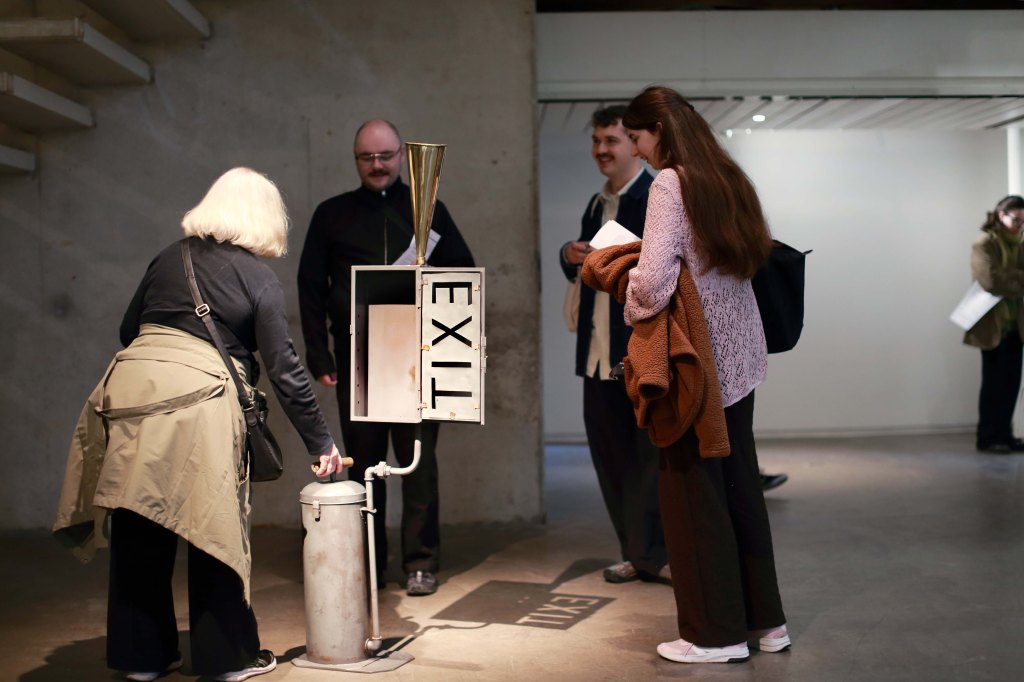
Exhibition Text
Gallery 1 EX/IT: LIFT
For his exhibition at The Douglas Hyde, Zahedi presents a newly commissioned body of work that interrogates bureaucratic systems – administrative, religious, institutional, and militaristic. Through a series of sound sculptures, some of which sound alarms, whilst others reflect endless rhythms of manual labour or ritual practice; Zahedi explores the capacity of the gallery space to challenge dominant systems through dialogue and collective action.
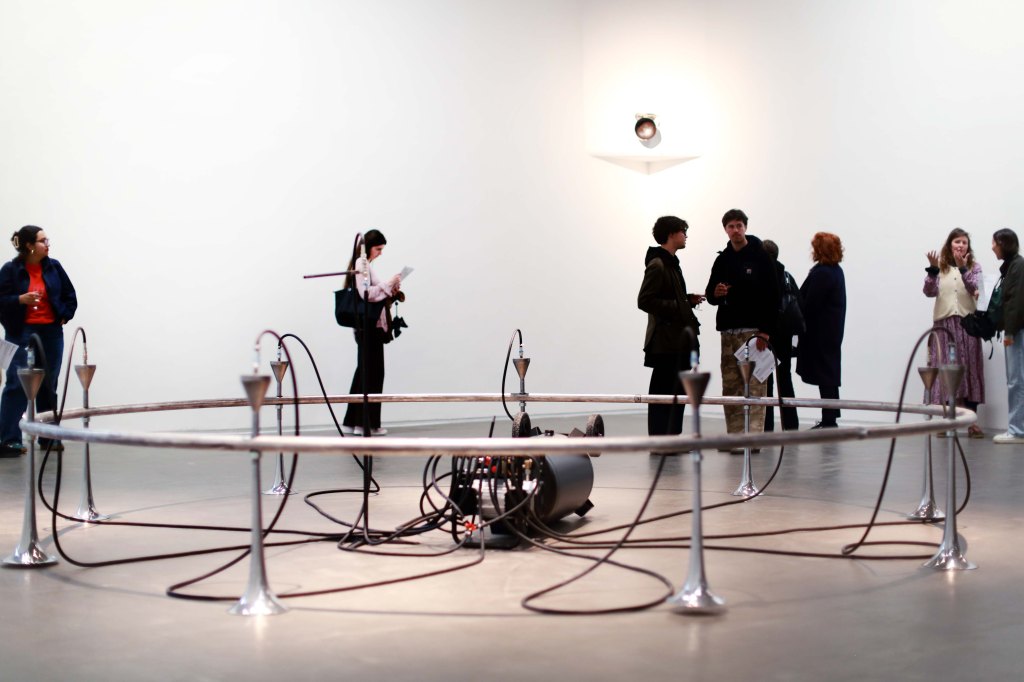
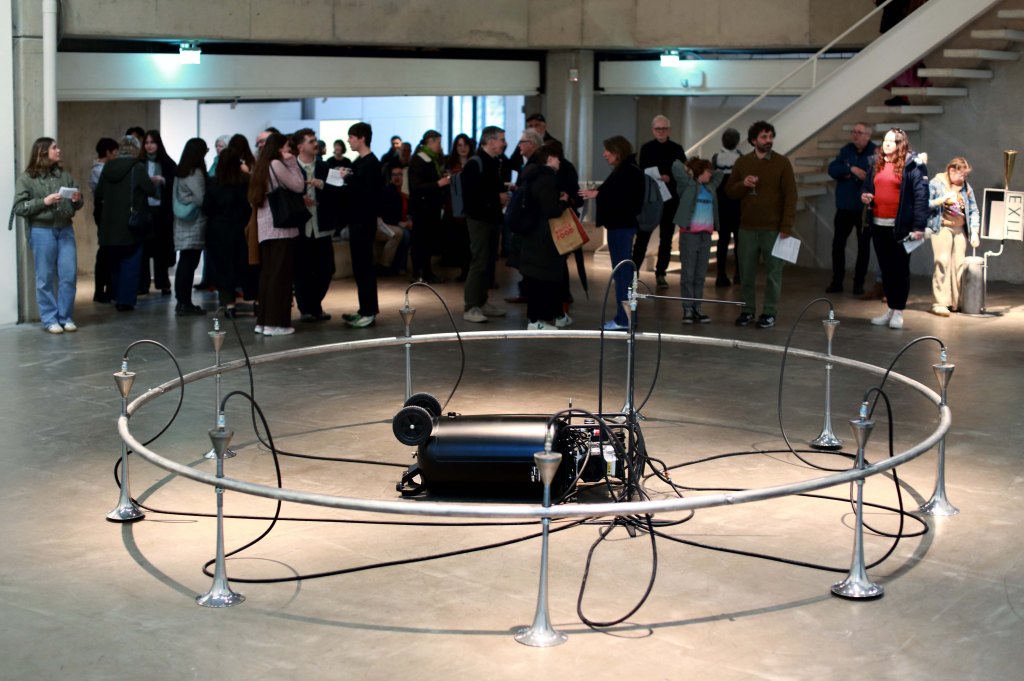
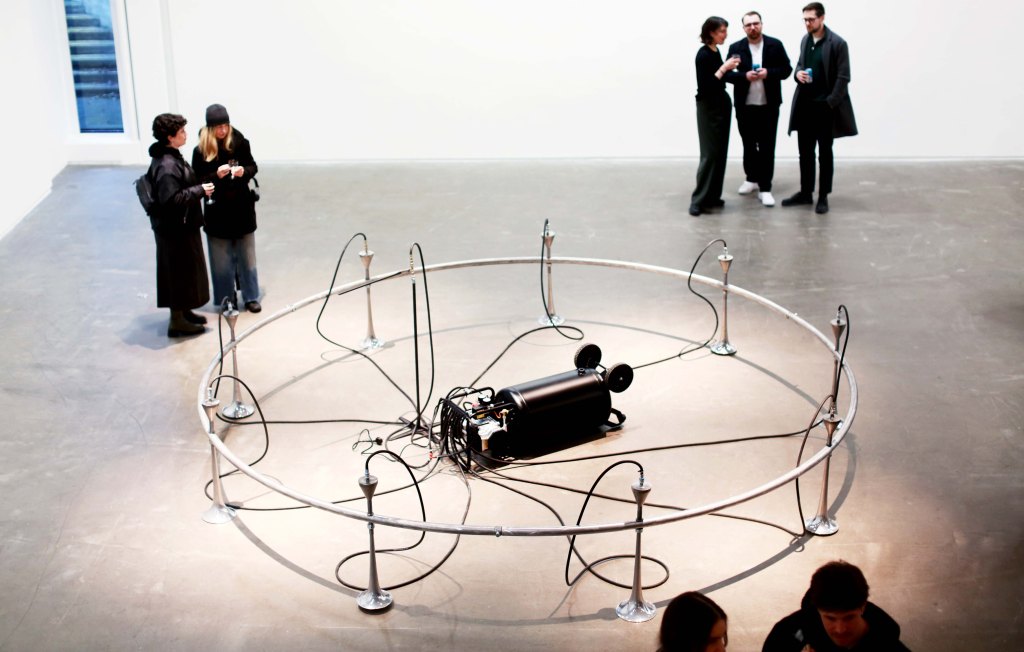
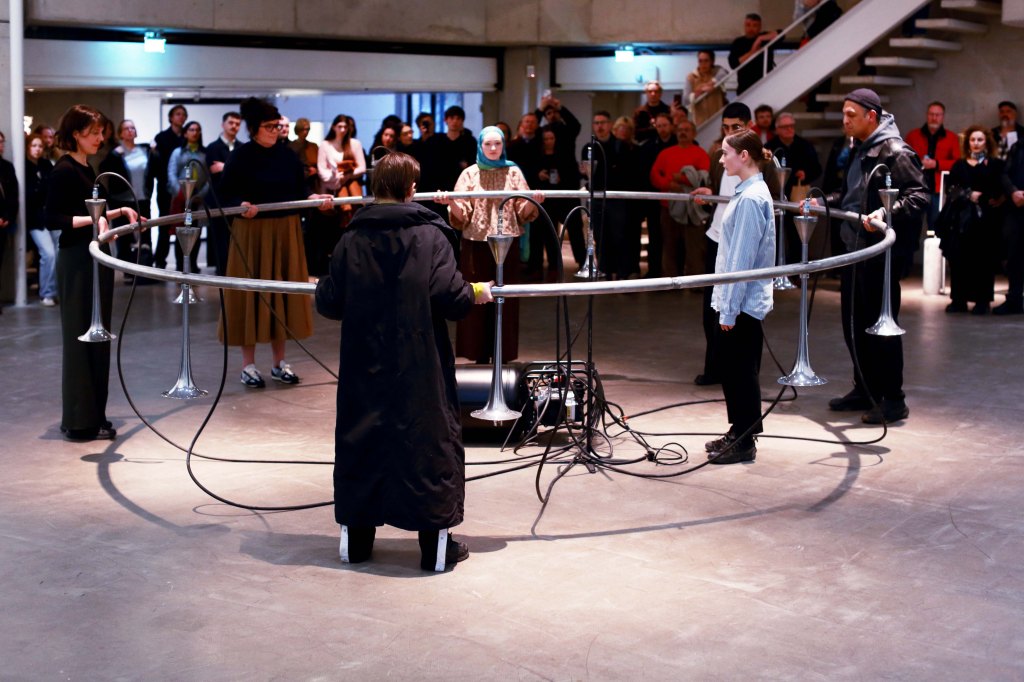
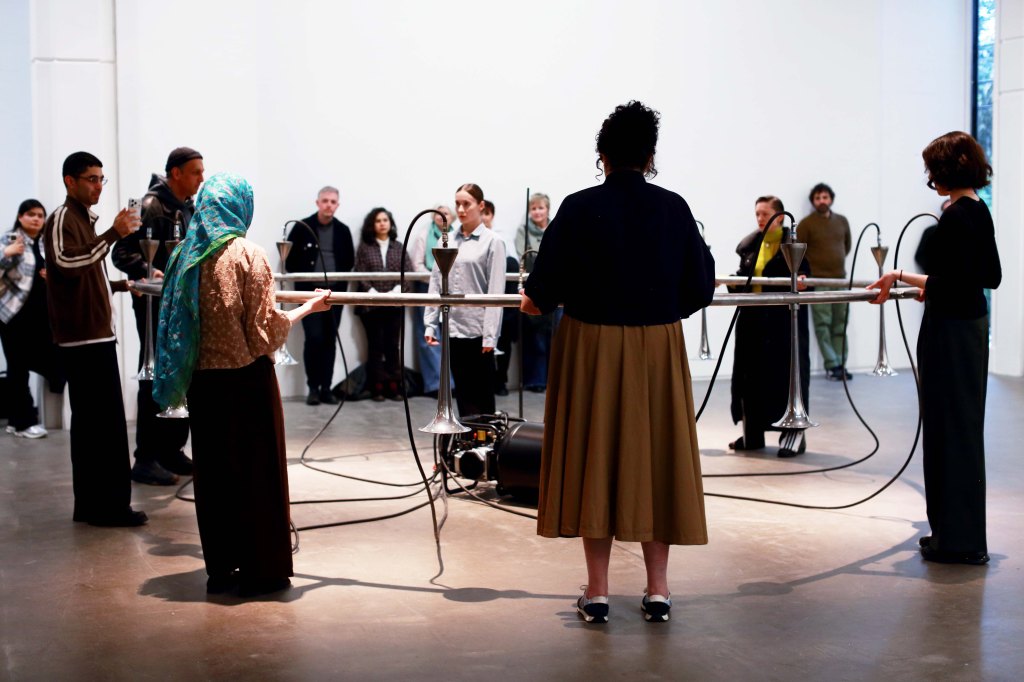
As a starting point for his exhibition, Zahedi drew connections between two pre-modern horns – the Celtic Carnyx and the Persian Karnay – both of which functioned as instruments of gathering, warning and orientation. Presented in Gallery 1, a new work LIFT takes the shape of these horns, with elongated stems for them to be held overhead, and inverts it. Here, nine chrome plated trombone horns are arranged in a large circle pointing to the floor. As an instrument, it remains inert until several people gather and lift it. In lifting and holding a note together, participants in the work transform an act of solidarity into physical vibrational force.
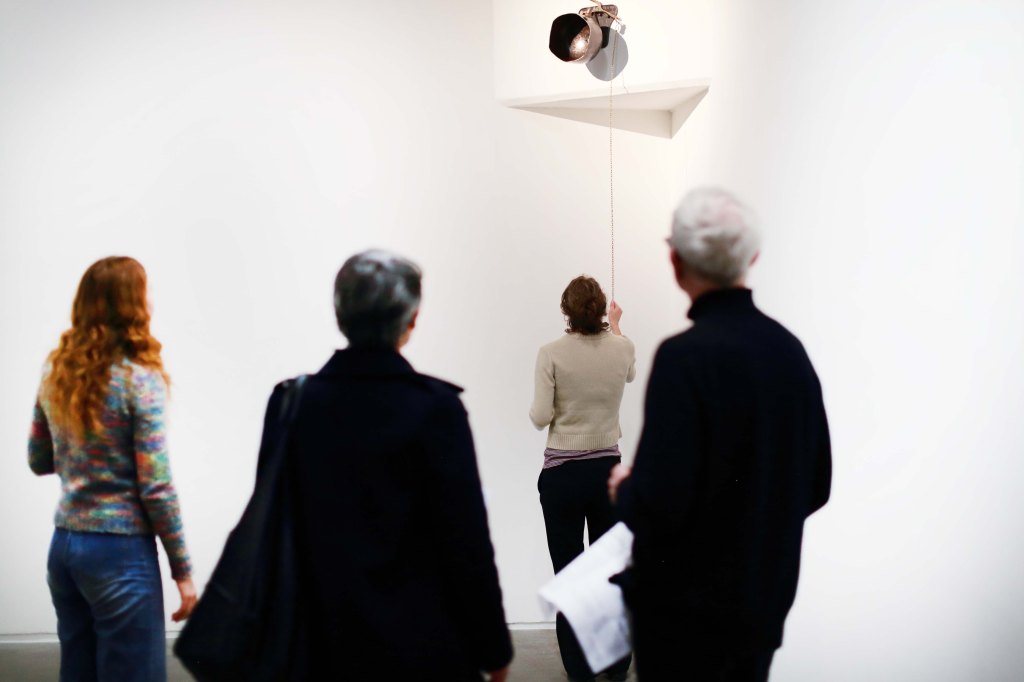
Also presented in Gallery 1, EX/IT is a sculpture fabricated from a salvaged foghorn and gas-powered exit sign. On activation, the work emits a short, sharp alarm signalling an alert to others in the gallery space. Combined with LIFT, these two works form the exhibition’s title and the basis for its framework – a routine of simple actions that shift the logic of the exhibition into a system of alarm, collective momentum, and lift.
In titling the exhibition EX/IT: LIFT, Zahedi considers how entering a gallery constitutes an exit – from the noise, acceleration, violence and saturation of everyday life. Within the gallery Zahedi proposes another system or logic; a rehearsal for new infrastructures informed by collective actions and the sharing of embodied experiences. A programme of events runs throughout the exhibition where works are activated in sequence by the participants. The programme is grounded by a simple but demanding question: what are you trying to exit? And what would it take to lift us out of it?
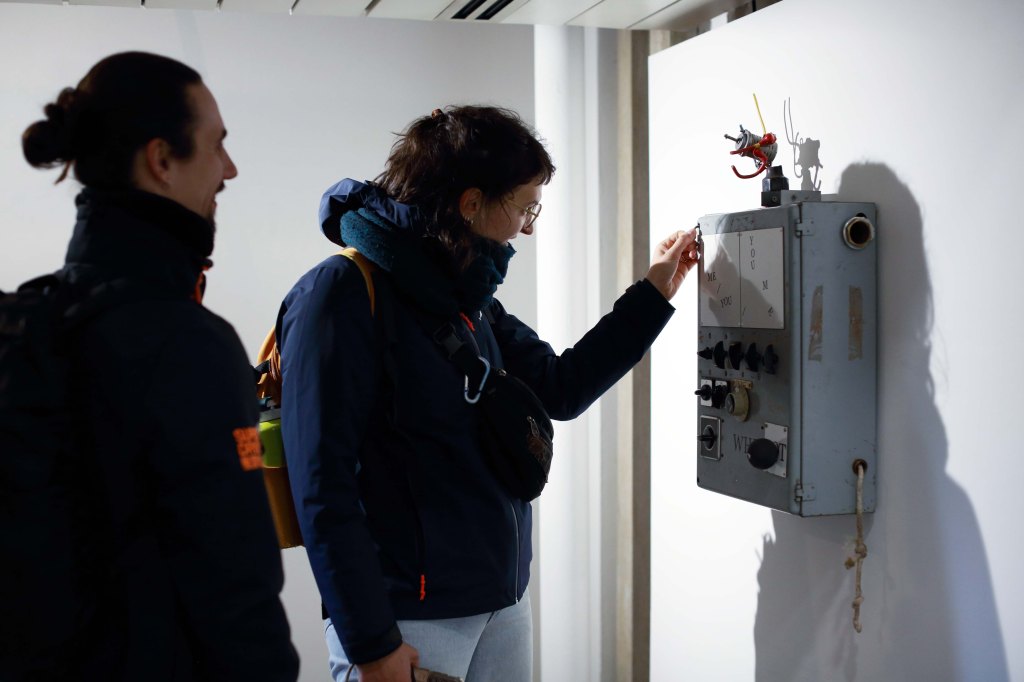
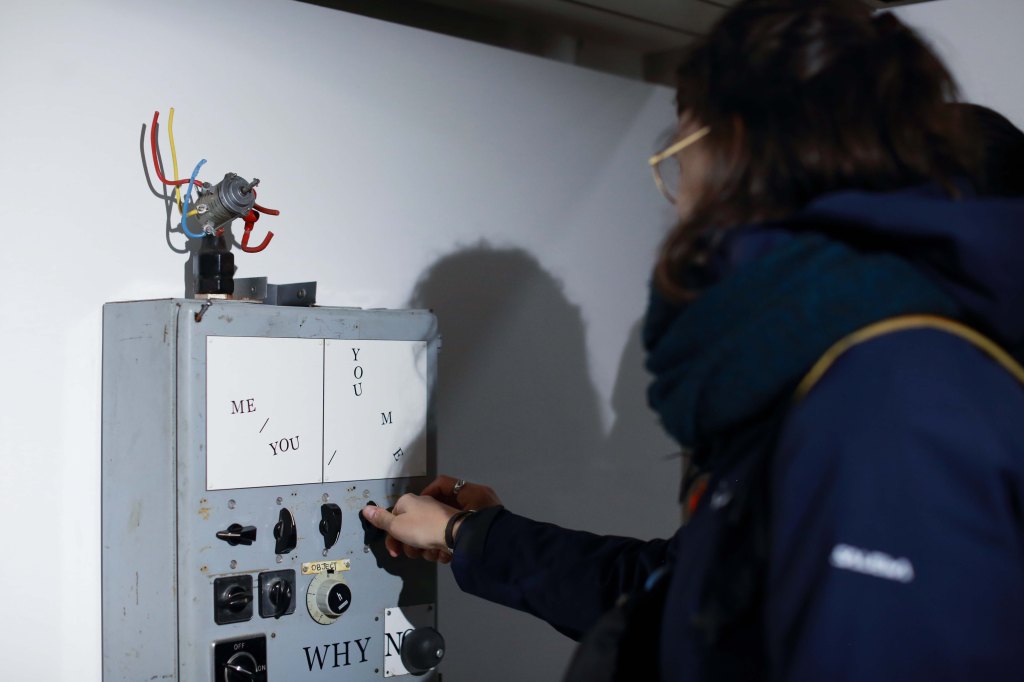
Other works in this exhibition include Switch Box Panel, which features an extended audio recording of shift work Zahedi did in a drinks bottling factory before becoming an artist. Housed in a defunct switch box, the sounds of mechanics and industrialisation filter into the gallery through an endless rhythm. As a form of dissociation, Zahedi reflects on the repetition of manual labour as a site for escape, or exit, into an imaginal space, wherein the seeds and materials of his artworks and concepts take shape.
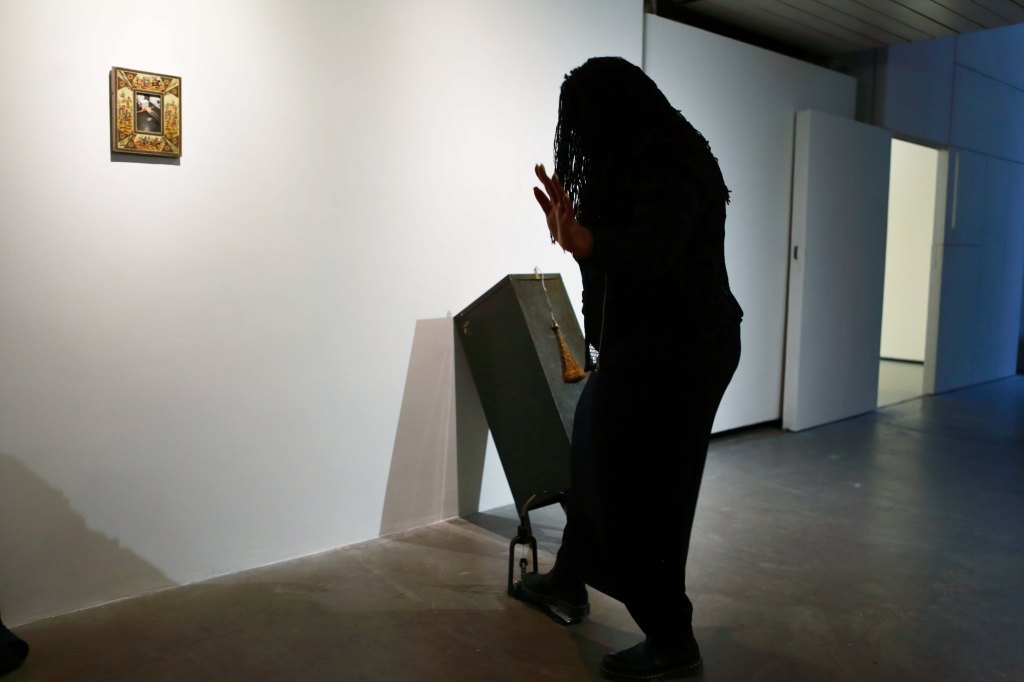
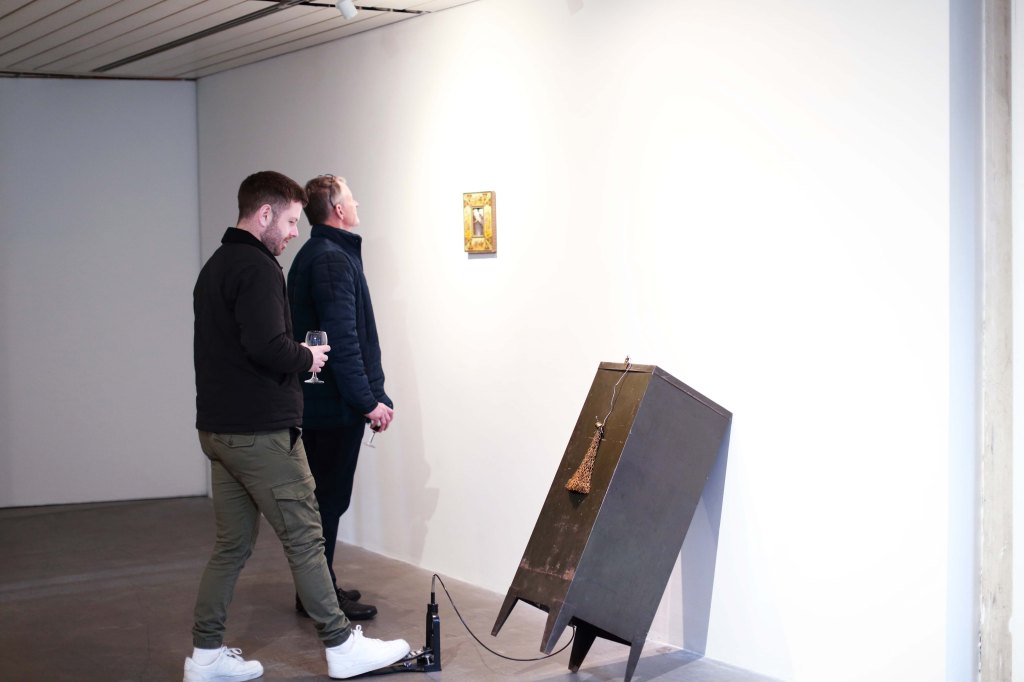
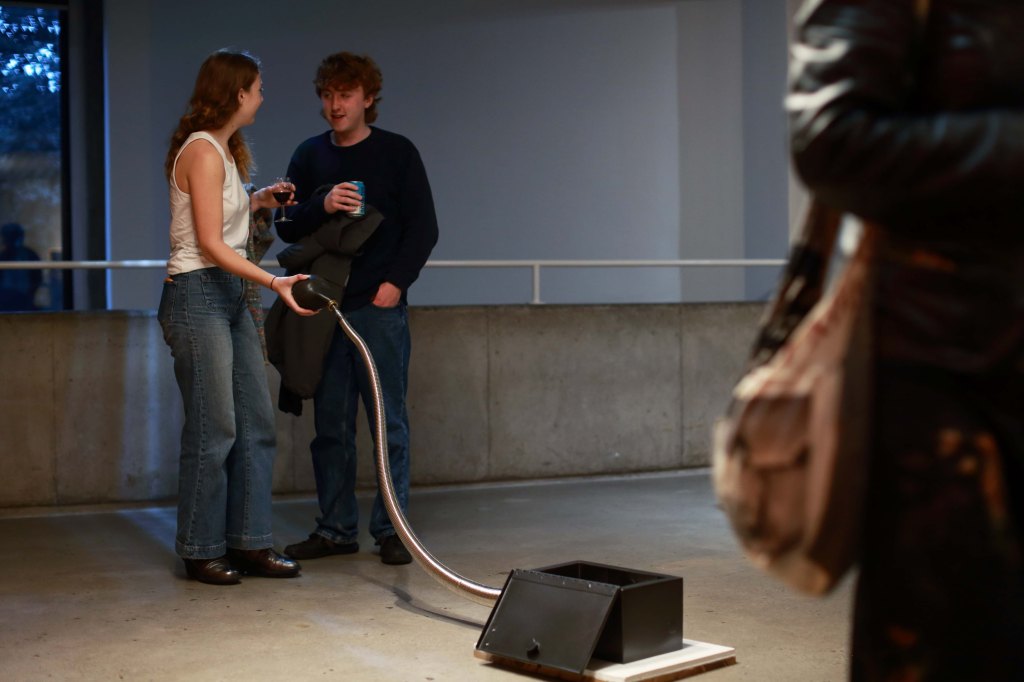
tank-gong-bell combines industrial salvage and devotional artefacts. Sound is used here to blur references to rituals of release and mechanical alarm. The handle of the sculpture comes from a zanjir – a self-flagellation device used in South-West Asian rituals of mourning. In the work it becomes part of the mechanism that chimes an adapted boxing bell. In another work, the dislocated chains of the zanjir strike an empty filing cabinet in Kick Drum. The sound produced is akin to a heartbeat or marching drum; echoes of ritual and devotion that slip into other logics or systemic order.
EX/IT: LIFT forms part of Zahedi’s practice framework which he terms ‘dissociative realism’. First used by writer Asalan Isa, in a 2021 essay of the same title, the term names an approach which sees Zahedi transform spaces of art into sites for processing the embodied dimension of post-traumatic states – most persistently grief, but also displacement, exhaustion, ideological collapse, and forms of social and political overwhelm that exceed individual coping mechanisms.
In EX/IT: LIFT, and the associated programme of events, Zahedi invites us to question the thresholds of dominant institutions and bureaucracies that often fail. In proposing new systems, we can move towards how to reimagine and how to rebuild.
Gallery 2 The Artist’s Eye
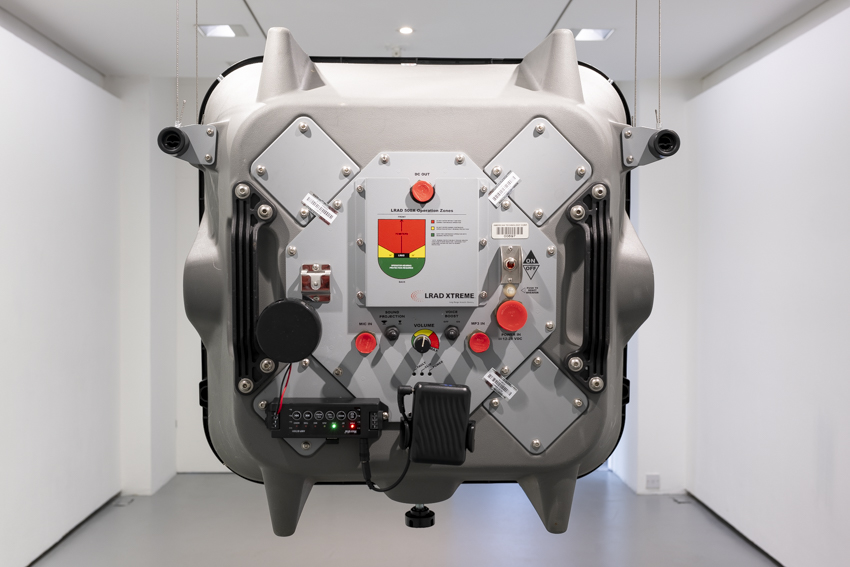
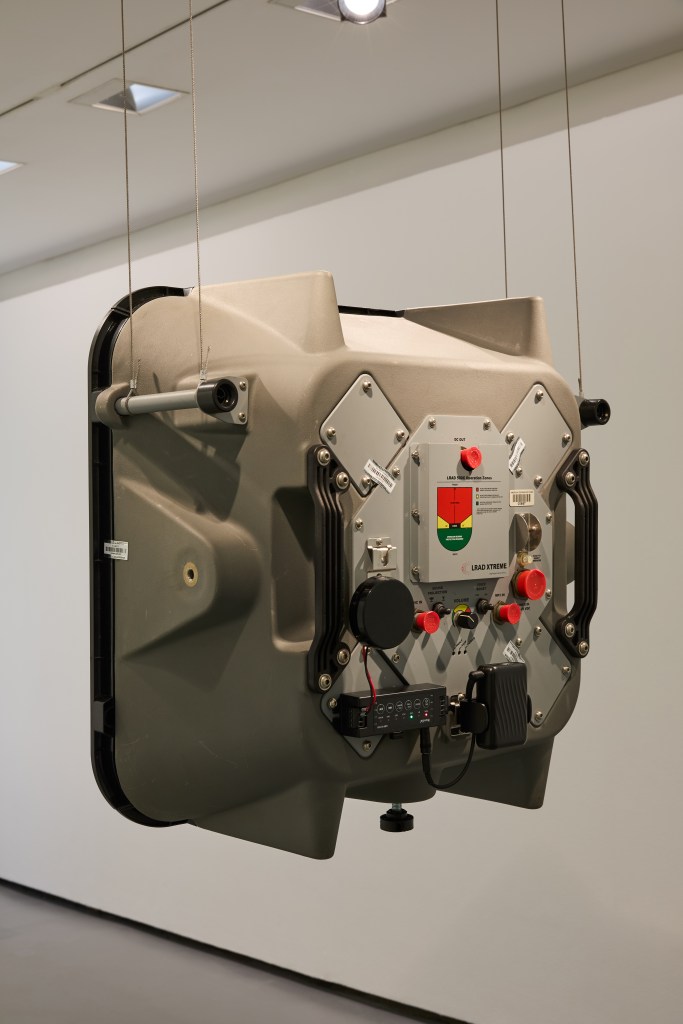
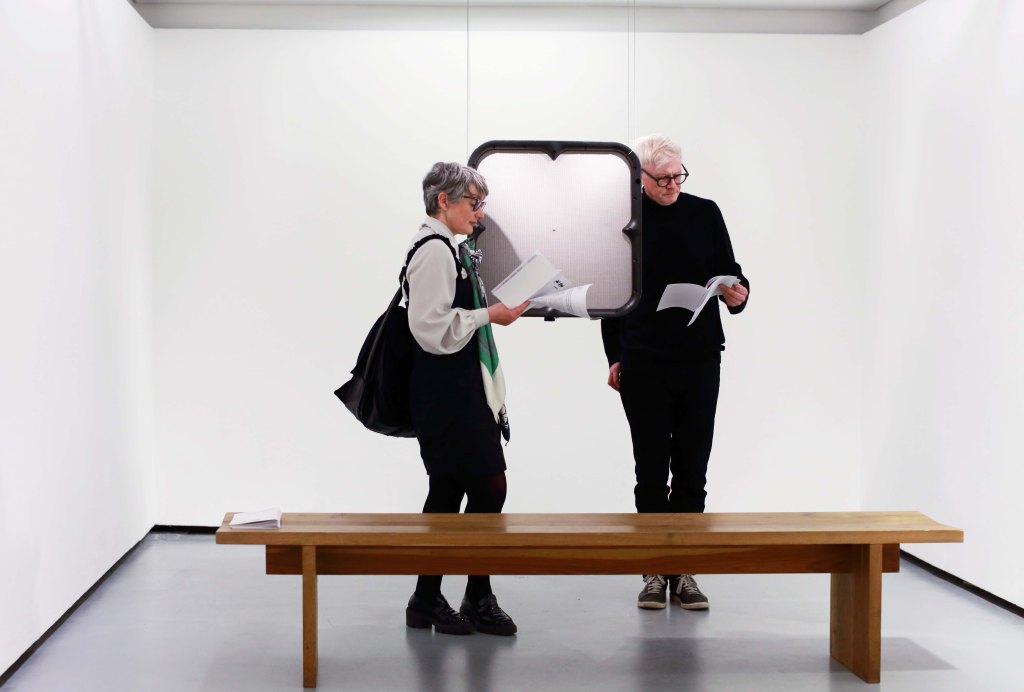
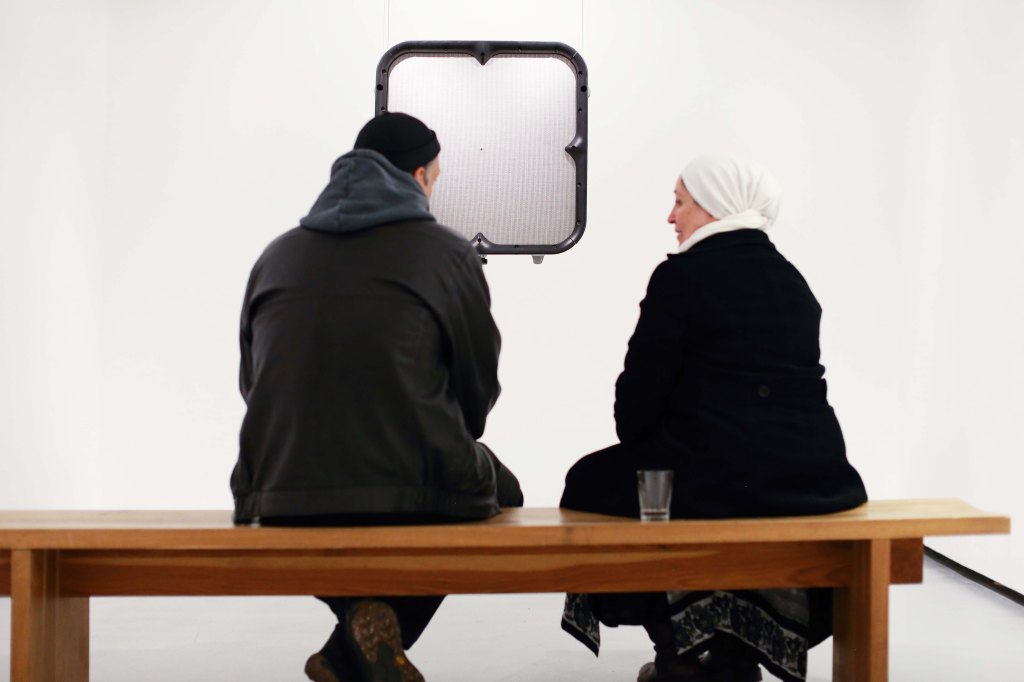
Acknowledging the crucial role artists play in influencing and shaping other artistic practices, The Artist’s Eye series asks those exhibiting in Gallery 1 to invite an artist of influence to present work in Gallery 2. In this instalment Abbas Zahedi has invited poet Bushra Mustafa Dunne to write and record a new poem. To host Dunne’s recorded poem, Zahedi has sourced an LRAD, a long-range acoustic device, which is installed in Gallery 2.
Often referred to as a ‘sound cannon’, the LRAD has increasingly been used as a sonic weapon in military and civil settings, including against anti-ICE protests in America, and was first ‘tested’ by the American army during the 2003 invasion of Iraq, where Dunne’s mother was born.
Evoking the Irish mourning tradition of keening, the poem weaves together personal narratives and reflections on militarism, memory, and grief, to imagine shared histories of sonic rituals and communal grieving. The voice in Dunne’s text attempts to subvert or hack the device, interspersing language from the LRAD user manual with reappropriations of the postcolonial Iraqi epic poem, Rain Hymn.
Dunne’s new poem, Keening with the rain/ نواح المطر , is read over an ambient composition by Dunne’s father, the composer John Dunne.
___
Bushra Mustafa Dunne is a poet and writer of mixed Iraqi and Irish heritage. Her writing practice explores exile, resistant ecologies, and is inspired by the Islamic tradition and her community organising, in both the Palestine and the climate movement. She completed her MA in Comparative Literature at UCL in 2024.
Exhibition Handout
Commissioned Text
Press and Media
2026 – Abbas Zahedi’s Fast Moving Air, Post-Appalachian, Inishturk, Culture File, RTÉ lyric fm source
Production Credits
Research & Development: Yasiin Zahedi
Technical design and fabrication of selected works: in collaboration with Saul Eisenberg.
With special thanks to Proyectos Ultravioleta for their support of the exhibition. The artist would also like to thank Abbas Akhavan, Amir Hanjani, Arsalan Isa, Aura Satz, Ayo Shonibare, Bas Ibellini, Bianca Chu, Camila Charask, Oswaldo Nicoletti, Camille Houzé, Eomac, Niamh Darling, Rachel McIntyre, Georgina Jackson, Joshua Leon, Kasia Kuzka, Emma Moore, Bill Harris, Matthew Coll, Stéphane Béna Hanley, Matthew Greenburgh, Mohammad Mehrabani, The New Centre for Research and Practice, Nocturn, Sally Davies, Sami Damoussi, Saul Eisenberg, Stefan Benchoam, Steve Goodman, Toby Üpson, The Dunnes, Zaida Violan, 17LPS, Patrick, and his own late family; the absences and losses that continue to shape him. RIP Khadija.
Further information about the exhibition can be found on The Douglas Hyde Gallery of Contemporary Art’s website source

