Chelsea Sorting Office, London, UK, 2020—2021
Video
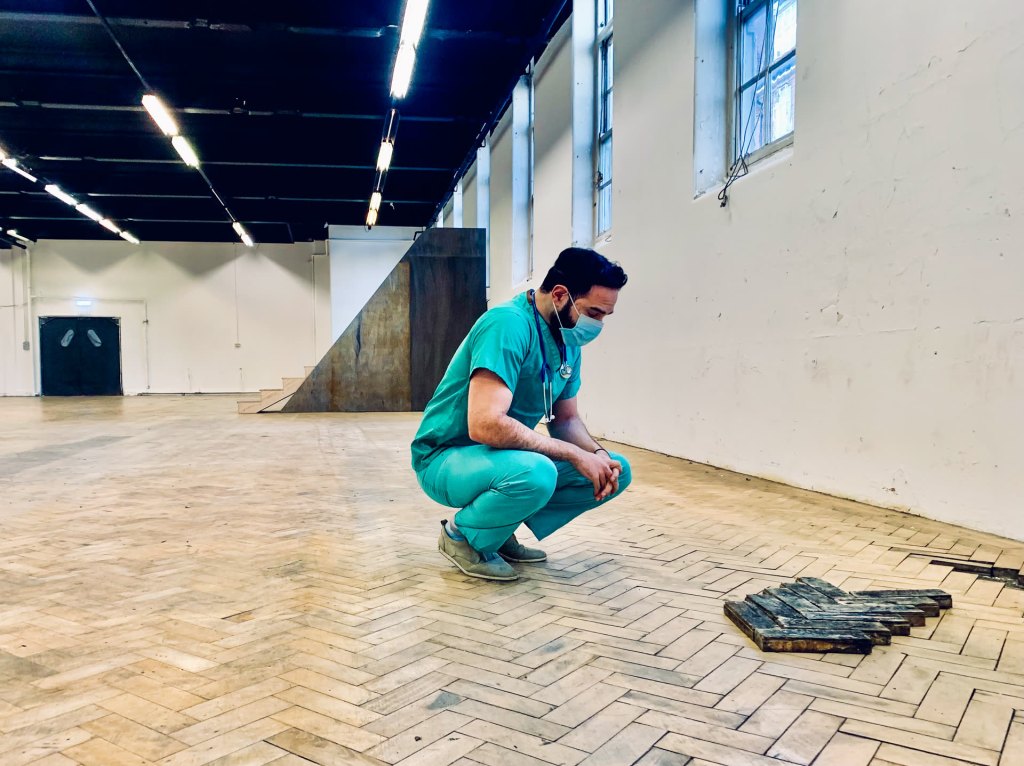
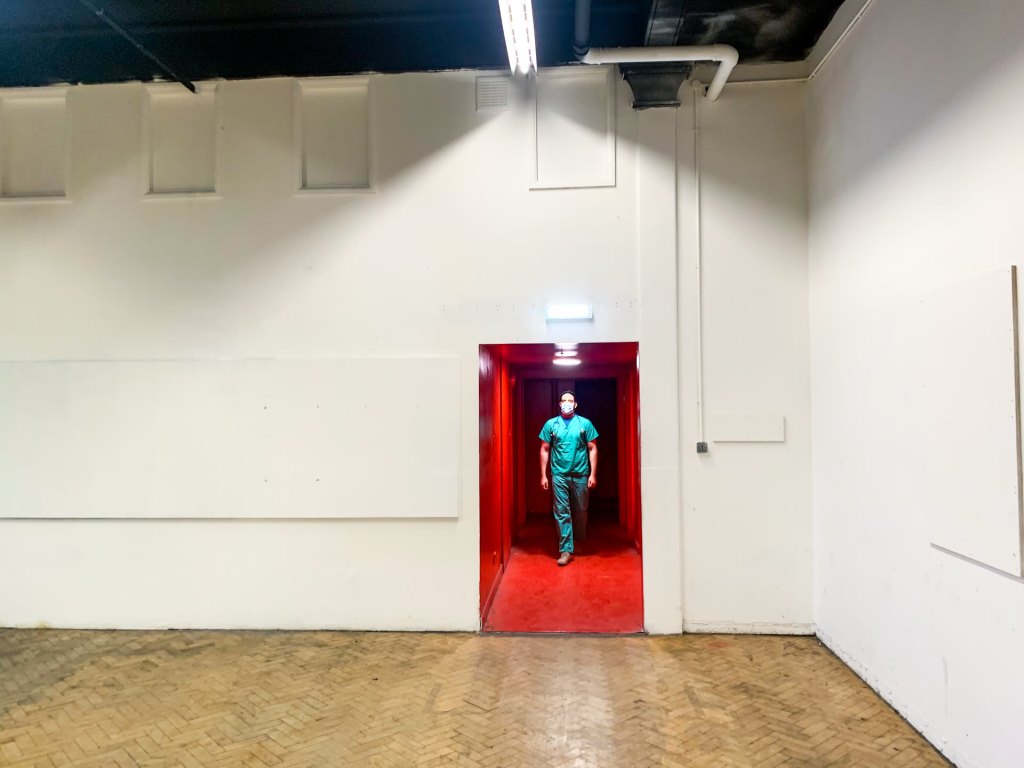
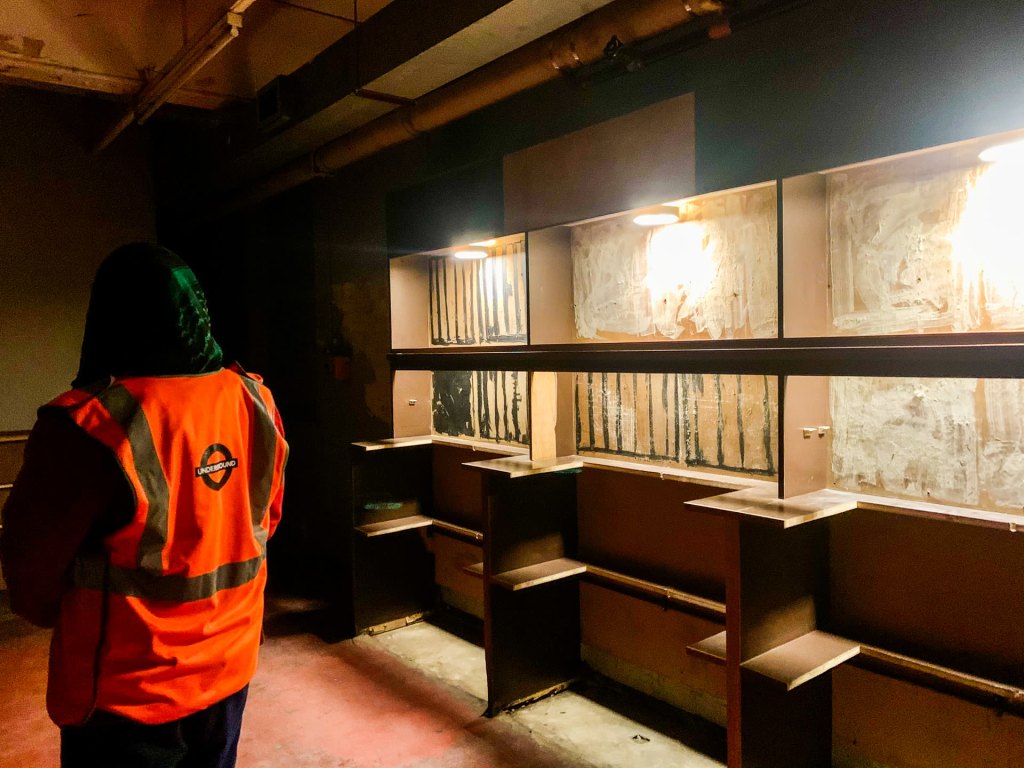
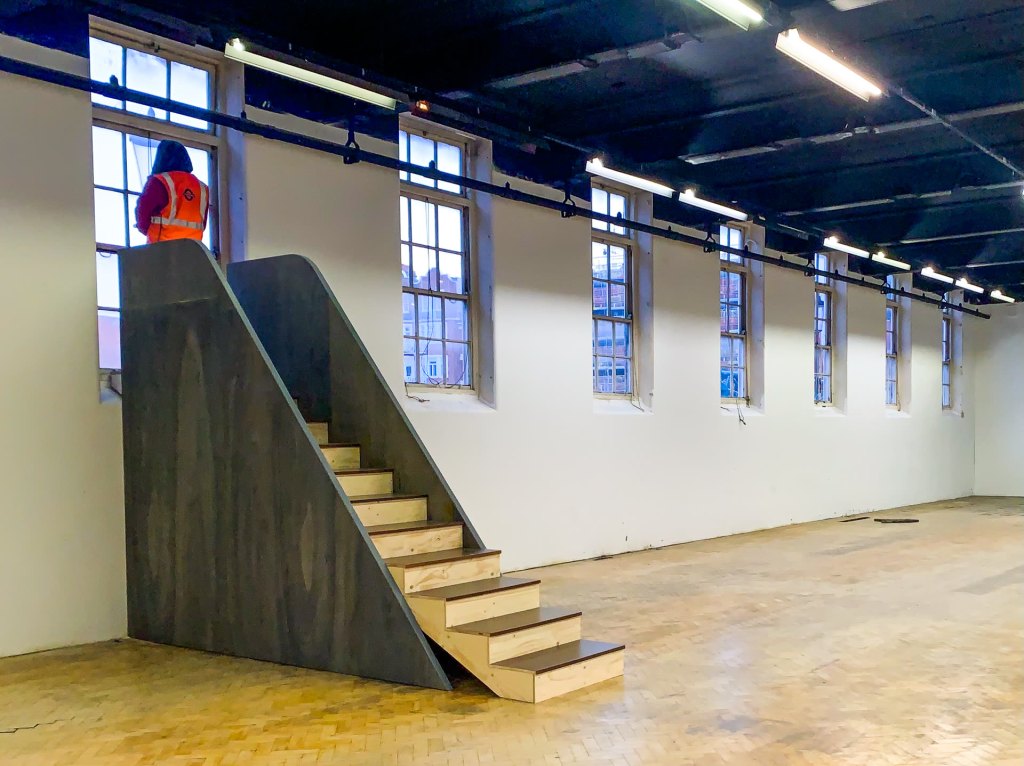
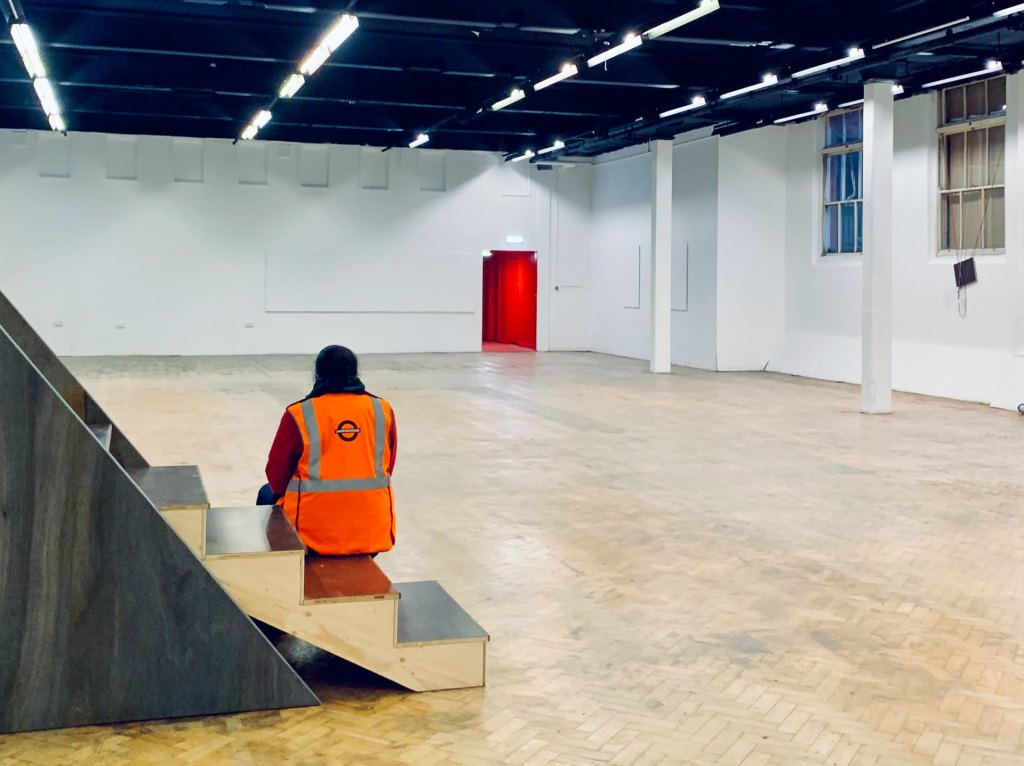
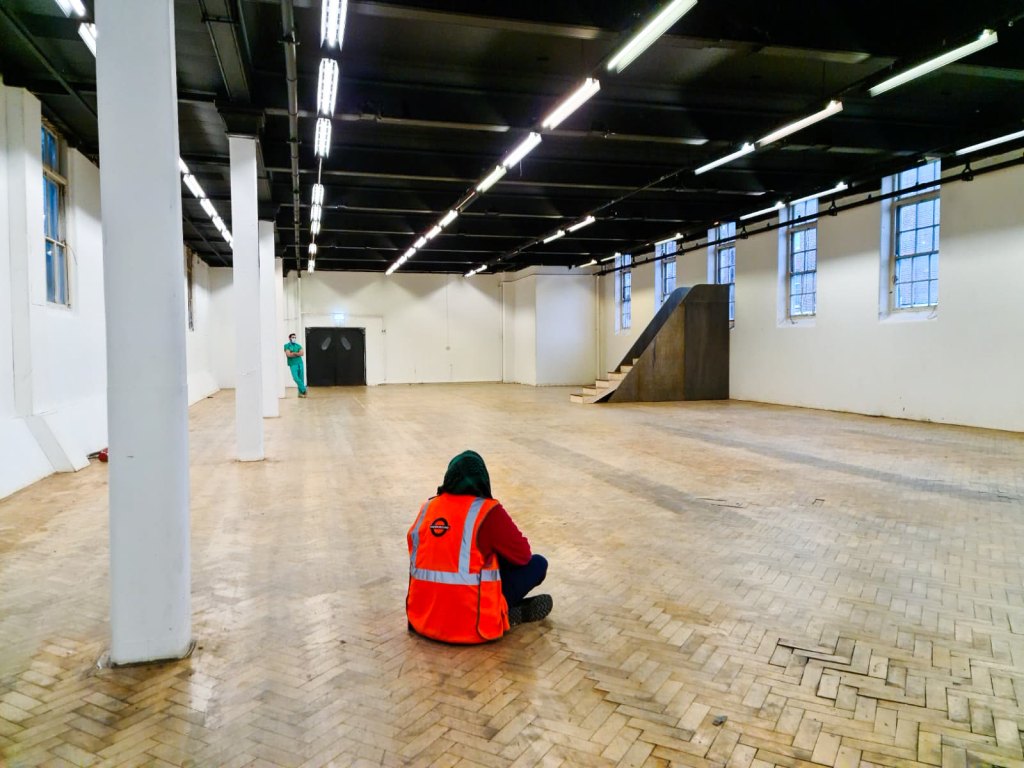
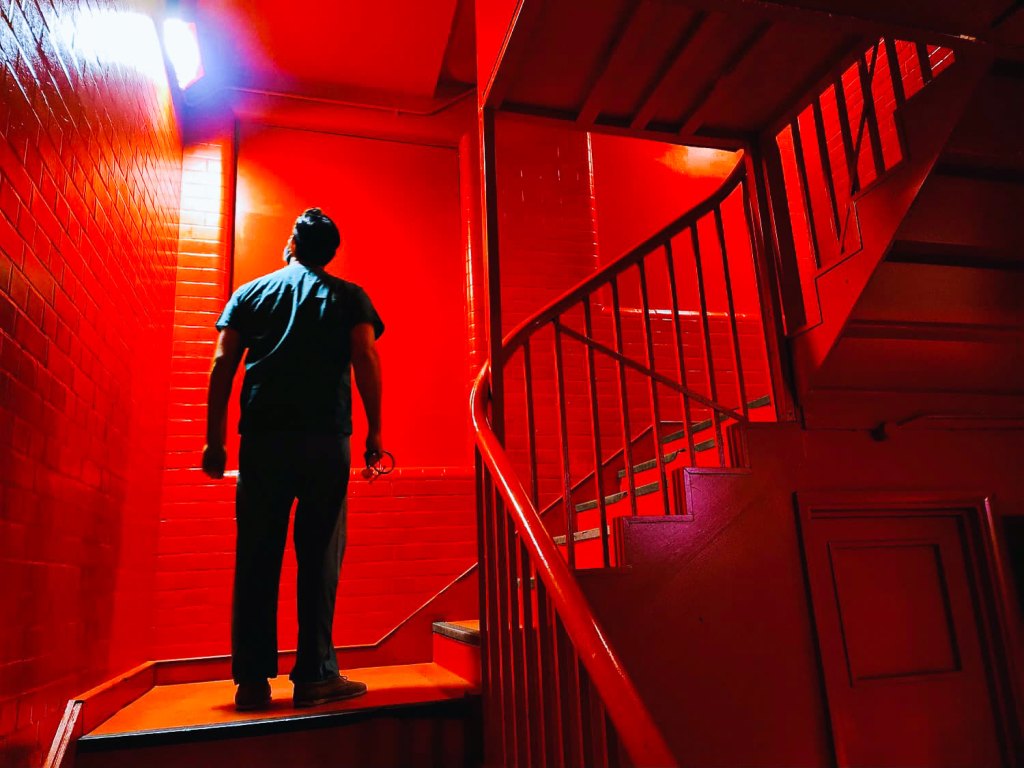
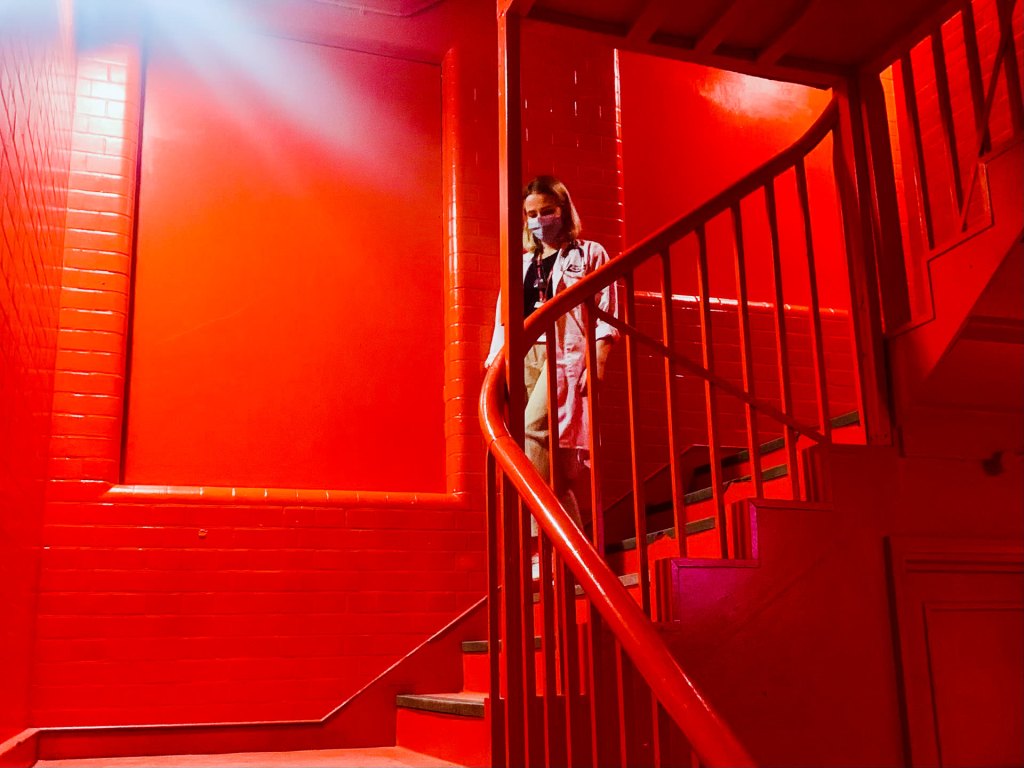
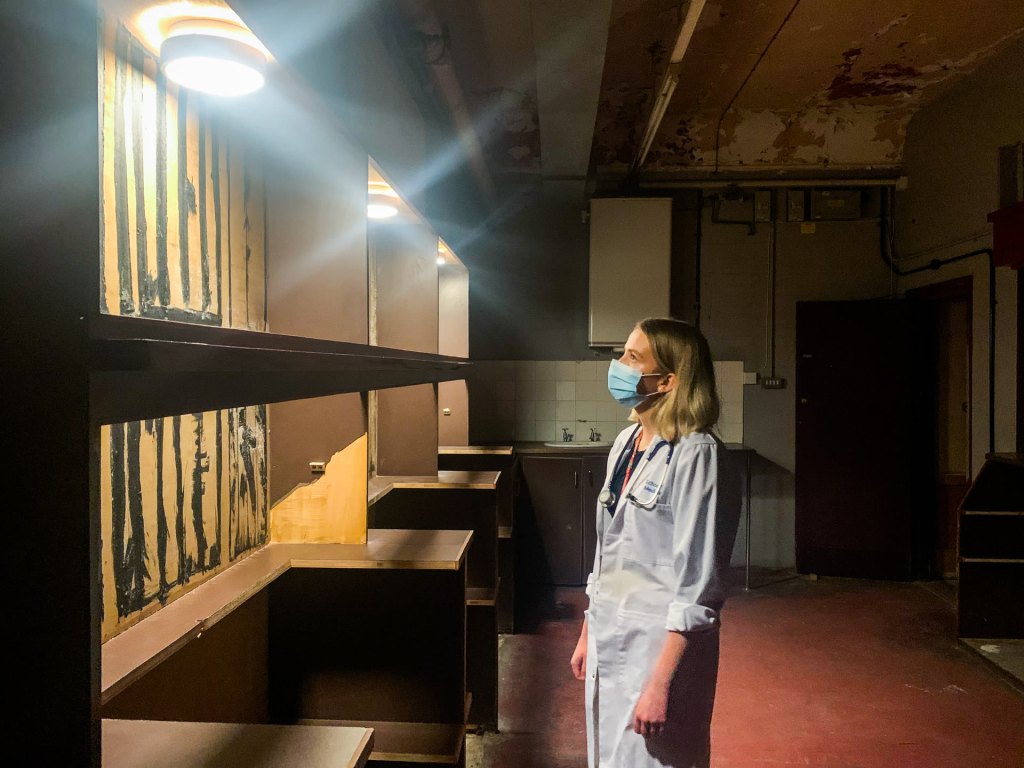
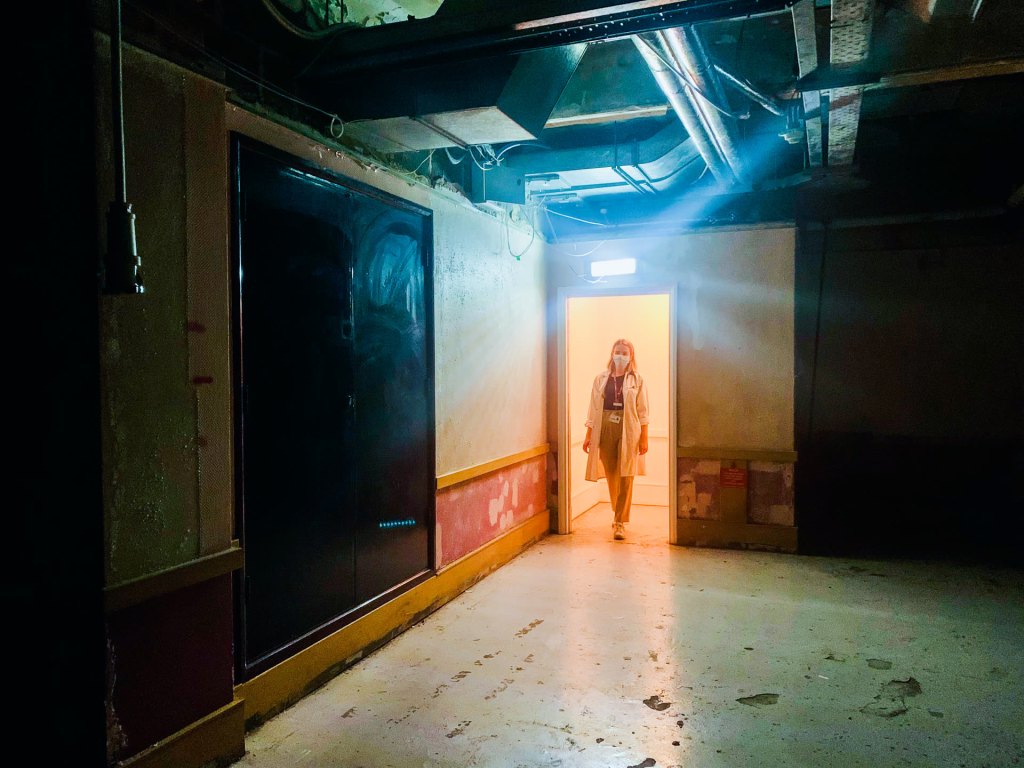
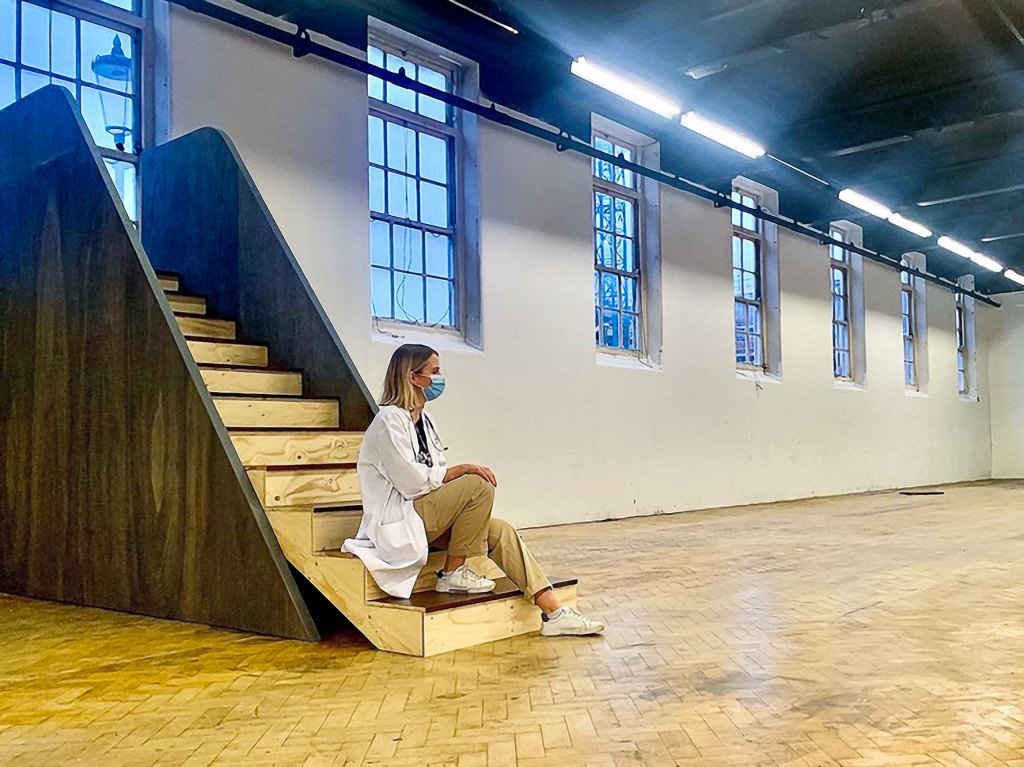
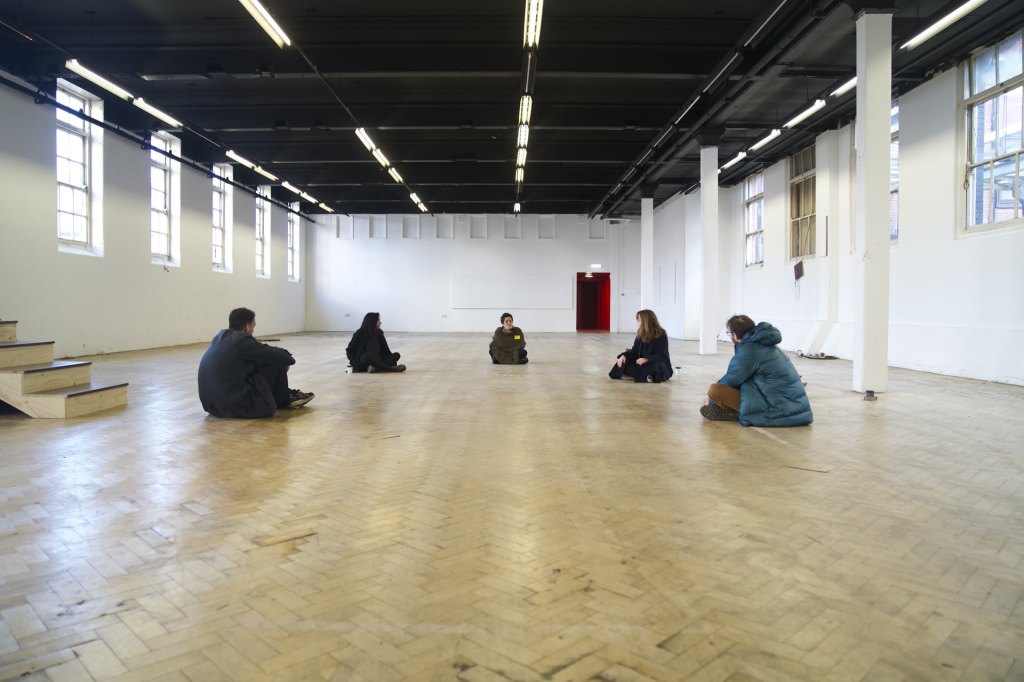
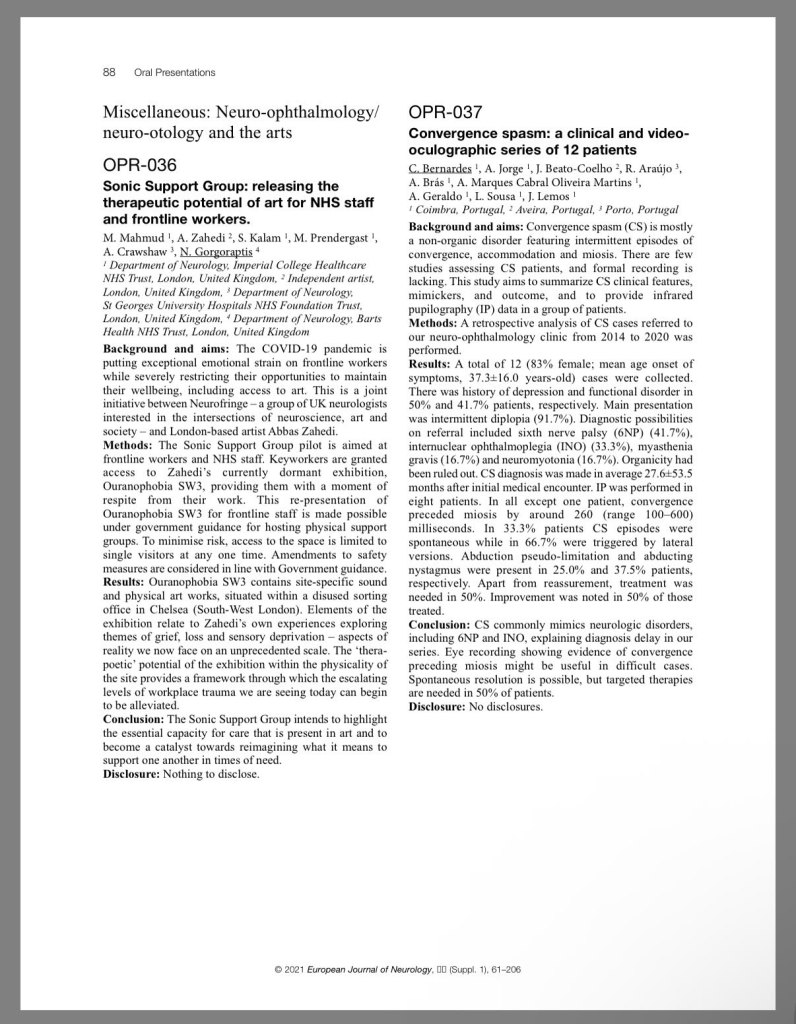
Image credits: Sonic Support Group attendees, Chelsea Sorting Office, 2020. Photo courtesy of the artist.
Project Description
Sonic Support Group is an interdisciplinary collaboration seeking to release the innate therapeutic potential within certain art exhibitions for NHS staff and frontline workers.
The project is a joint initiative between Neurofringe — a group of Neurologists working in the UK who are engaged in the cutting edge intersections of neuroscience, art and society — and London based artist Abbas Zahedi. By working across disciplines, Neurofringe and Zahedi are seeking to highlight the essential capacity for care that is present in both medicine and art; whilst also addressing social binaries emerging with generalised labels such as the ‘useful’ and the ‘useless.’ In this way, Sonic Support Group intends to become a catalyst towards reimagining what it means to support one another in ongoing times of need.
The initial Sonic Support Group pilot, taking place since December 2020, is wholly aimed at frontline workers and NHS staff. Once referred, individuals from these sectors are granted special access to Zahedi’s currently dormant exhibition, Ouranophobia SW3 on a therapeutic basis. Sonic Support Group provides these individuals with a moment of precious respite from their day to day efforts to aid the public whilst becoming increasingly vulnerable themselves.
Ouranophobia SW3 contains a number of site-specific sound and physical art works, situated within a disused sorting office in Chelsea (South-West London). Elements of the show relate to Zahedi’s own experiences as a former medic, whilst also exploring themes of grief, loss and sensory deprivation — aspects of reality which we all now face on an unprecedented scale. The ‘thera-poetic’ potential of the exhibition, as well as the physicality of the building and site, therefore provide an ideal framework through which the escalating levels of workplace trauma that we are seeing today can begin to be alleviated.
This re-presentation of Ouranophobia SW3 for frontline staff is made possible under government guidance for hosting physical support groups during times of restriction. To alleviate risks, the organisers are accepting referrals from those based within the local area for the time being — which includes several hospitals, a medical college and a number of TfL stations that are all within walking distance of the exhibition. Safety is further ensured through limiting access to the space to single visitors at any one time.
Source: Neurofringe — Sonic Support Group (2021).
Collaborators & Contact
Neurofringe is an organisation founded by Mohammad Mahmud, Sabrina Kalam, Nikos Gorgoraptis and Ania Crawshaw — a group of neurologists working in the UK, brought together by a shared interest in the borderlands between neurosciences, art and society. Neurofringe is a platform and forum for projects and dialogues which fall into just such areas of overlap.
Abbas Zahedi is a London based artist, blending contemporary philosophy, poetics, and social dynamics with performance, sound, sculpture, and moving-image.
Toby Upson contributed project management and follow up support.
With thanks to rb&hArts and the Royal Brompton and Harefield NHS Foundation Trust, and to Karen Janody (Head of Arts at Royal Brompton & Harefield) for wellbeing facilitation during the pilot. Video shot and edited by William Barylo.
EAN Abstract — OPR-036 (2021)
Sonic Support Group: releasing the therapeutic potential of art for NHS staff and frontline workers.
M. Mahmud¹, A. Zahedi², S. Kalam¹, M. Prendergast¹, A. Crawshaw³, N. Gorgoraptis⁴
¹ Department of Neurology, Imperial College Healthcare NHS Trust, London, United Kingdom; ² Independent artist, London, United Kingdom; ³ Department of Neurology, St Georges University Hospitals NHS Foundation Trust, London, United Kingdom; ⁴ Department of Neurology, Barts Health NHS Trust, London, United Kingdom.
Background and aims: The COVID-19 pandemic is putting exceptional emotional strain on frontline workers while severely restricting their wellbeing, including access to art. This is a joint initiative between Neurofringe — a group of UK neurologists interested in the intersections of neuroscience, art and society — and London-based artist Abbas Zahedi.
Methods: The Sonic Support Group pilot is aimed at frontline workers and NHS staff. Keyworkers are granted access to Zahedi’s currently dormant exhibition, Ouranophobia SW3, providing them with a moment of respite from their work. This re-presentation of Ouranophobia SW3 for frontline staff is made possible under government guidance for hosting physical support groups. To alleviate risks, access to the space is limited to single visitors at any one time. Amendments are considered in line with Government guidance.
Results: Ouranophobia SW3 contains site-specific sound and physical art works, situated within a disused sorting office in Chelsea (South-West London). Elements of the exhibition relate to Zahedi’s own experiences of grief, loss and sensory deprivation — aspects of reality we are now experiencing on an unprecedented scale. The ‘thera-poetic’ potential of the exhibition with the physicality of the site provides a framework through which the escalating levels of workplace trauma we are seeing today can begin to be alleviated.
Conclusion: The Sonic Support Group intends to highlight the essential capacity for care that is present in art and to become a catalyst towards reimagining what it means to support one another in times of need.
Disclosure: Nothing to disclose.
Published in: European Journal of Neurology, Volume 28, Supplement 1, June 2021. Abstracts of the 7th Congress of the European Academy of Neurology (Virtual Congress). Oral Presentations — Miscellaneous: Neuro-ophthalmology / neuro-otology and the arts. ISSN 1468-1331.
Press & Bibliography
- 2021 – How Abbas Zahedi Turned an Exhibition into a Mutual Aid Group, Róisín Tapponi for Frieze source
- 2021 – Lingering in Gentle Sorrow: Abbas Zahedi at the Chelsea Sorting Office, Hammad Nasar for Ocula source
- 2021 – Fear of heaven: Abbas Zahedi on creating places to reflect, inspect, investigate or expand at the intersection of the social & sacred, Kashif Sharma-Patel for AQNB source
- 2020 – Interview: Ouranophobia SW3, Adam Hines-Green
- 2021 – Ouranophobia SW3, Chloe Carroll for Art Monthly no. 443

