Nottingham Contemporary, Nottingham, UK, 2023
- Image Gallery
- Audio Documentation
- Exhibition Text
- Artist Insights Video
- ‘How to Make’ Event Documentation
- Exhibition Reviews

Image Gallery






Audio Documentation
Exhibition Text
Abbas Zahedi works with people and places to help process difficult emotions and histories. In Holding a Heart in Artifice, Zahedi combines visual and sensory elements to create space for conversation and shared experience. Under his guidance, a gallery can function as an emotional utility into which we are all implicated.
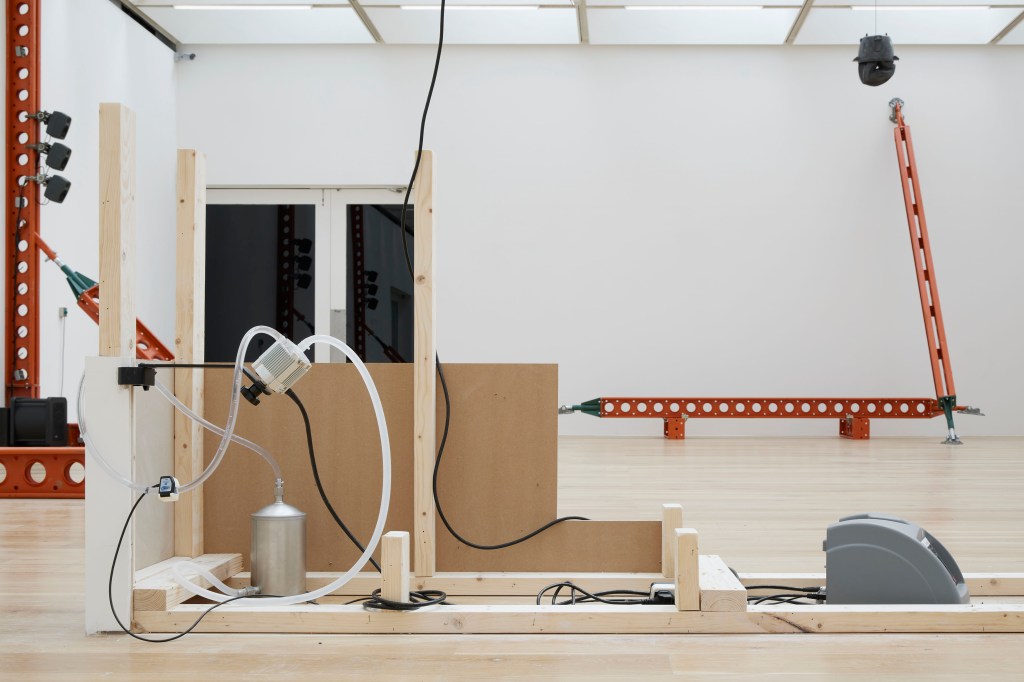
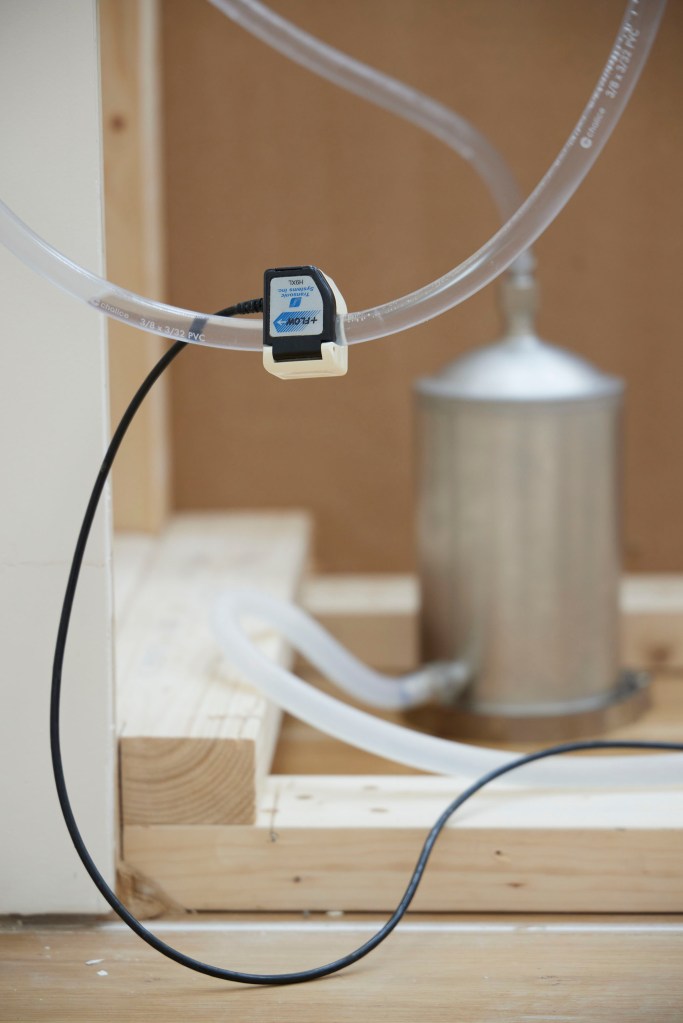
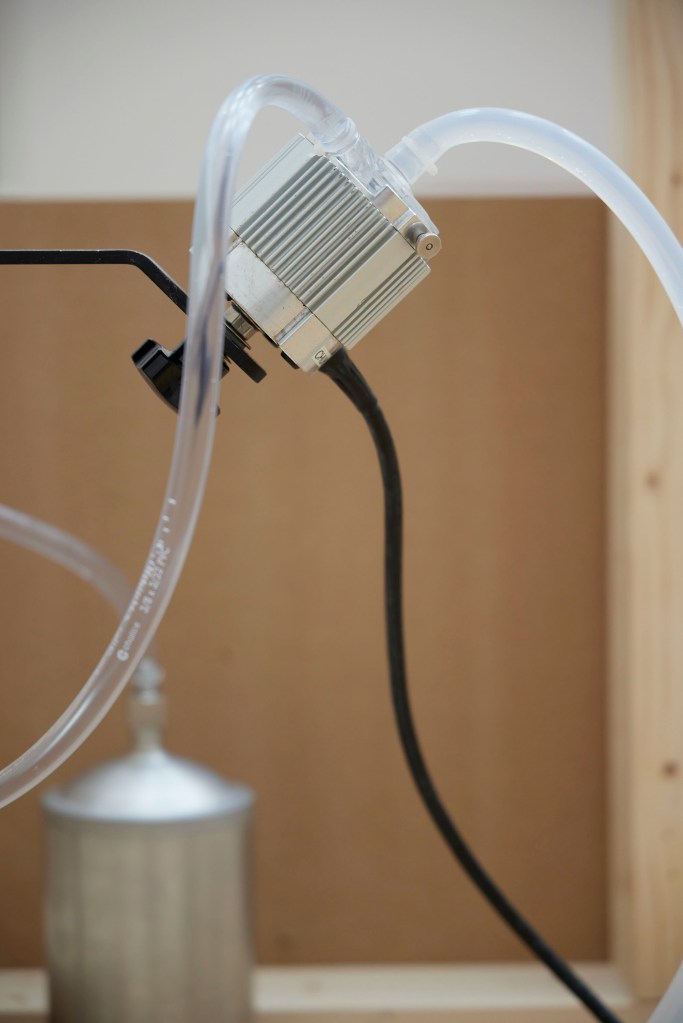
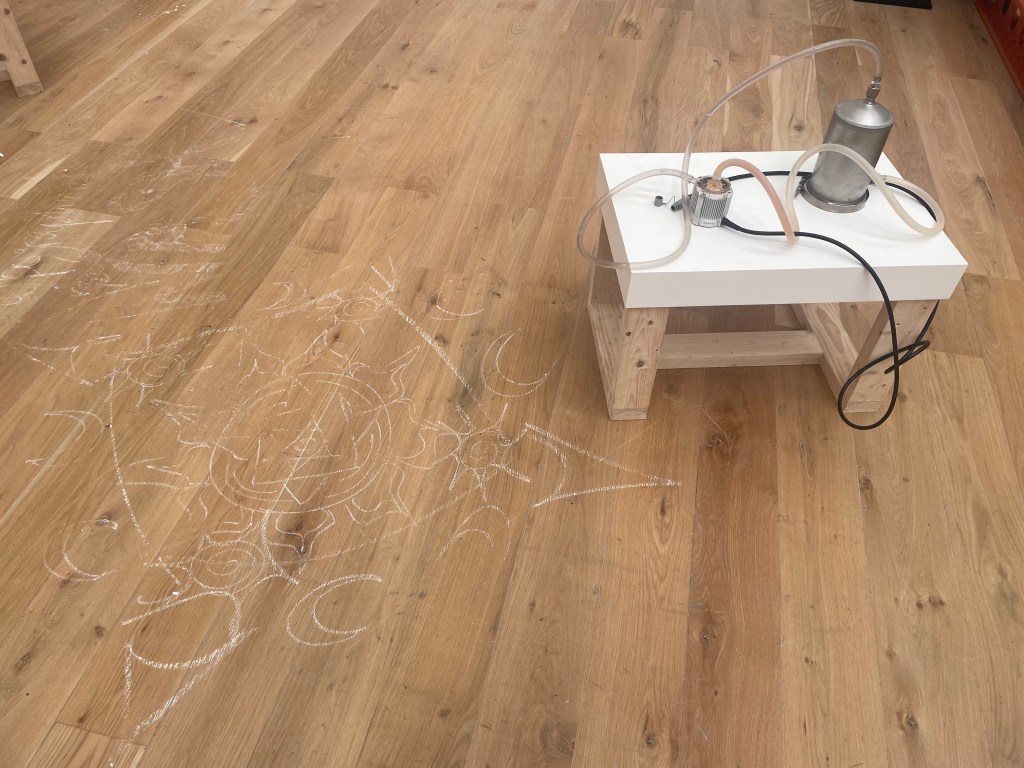
Initially trained as a medic, Zahedi diverted his energies towards making art following a close bereavement. In this exhibition, he considers the parallels between the aesthetics of medical environments and contemporary art spaces – namely, the white sterility of both that he associates with sickness, dying and death. Following conversations with staff from the Extra Corporeal Membrane Oxygenation (ECMO) department at Glenfield Hospital in Leicester, Zahedi accentuates this parallel by placing loaned ECMO equipment in the gallery space. ECMO – a treatment that Zahedi has a personal connection to – is a life-support therapy that uses an artificial heart-lung machine to oxygenate a patient’s blood outside of their body. Whilst receiving this treatment the patient is in an in-between state, neither dead nor alive; they are reliant on the medical system surrounding them to survive. In Holding a Heart in Artifice, the machinery quietly hums, pumping moisture gathered from the gallery atmosphere through its system. The artificial heart sits visibly within the carcass of a wall built for a previous exhibition. Here, the machine alludes to another form of support; that of the visitor’s presence energising and stabilising an institution. Neither can function alone.
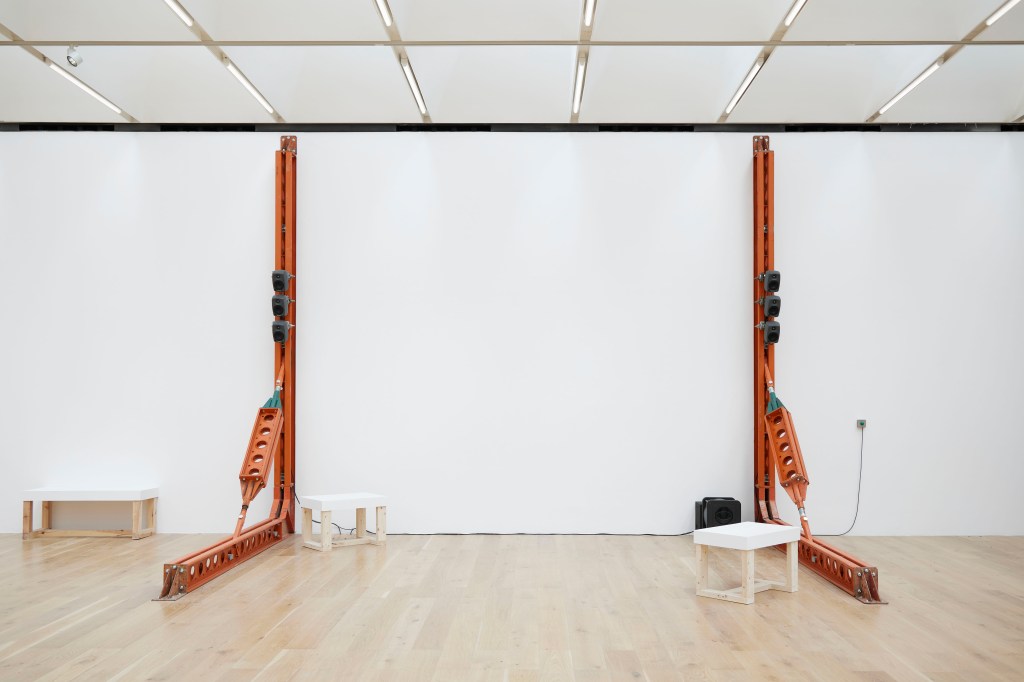
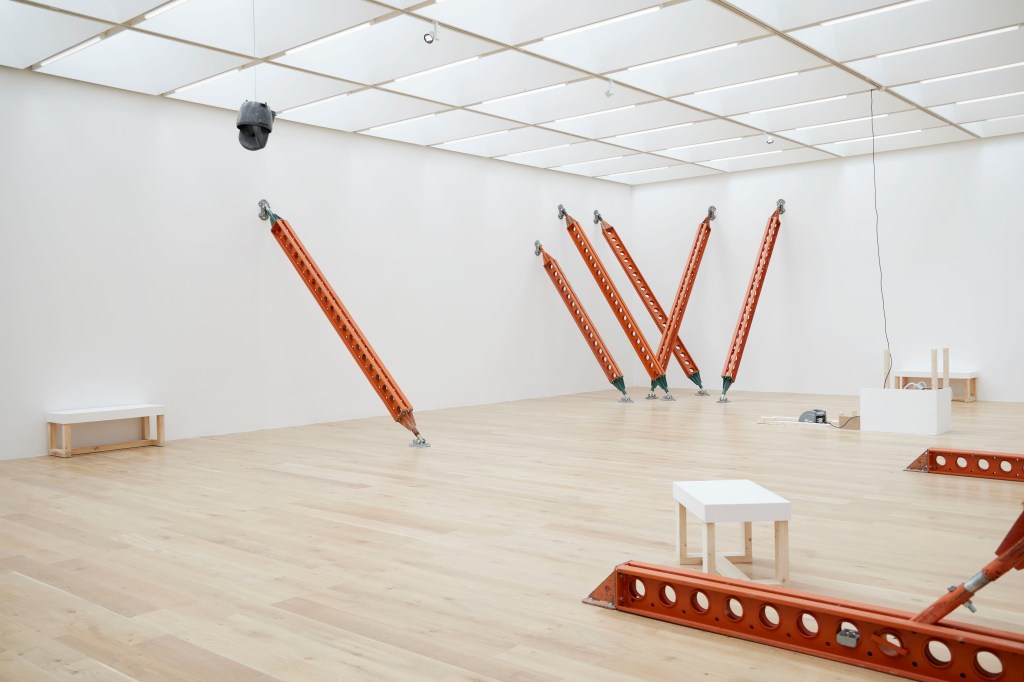
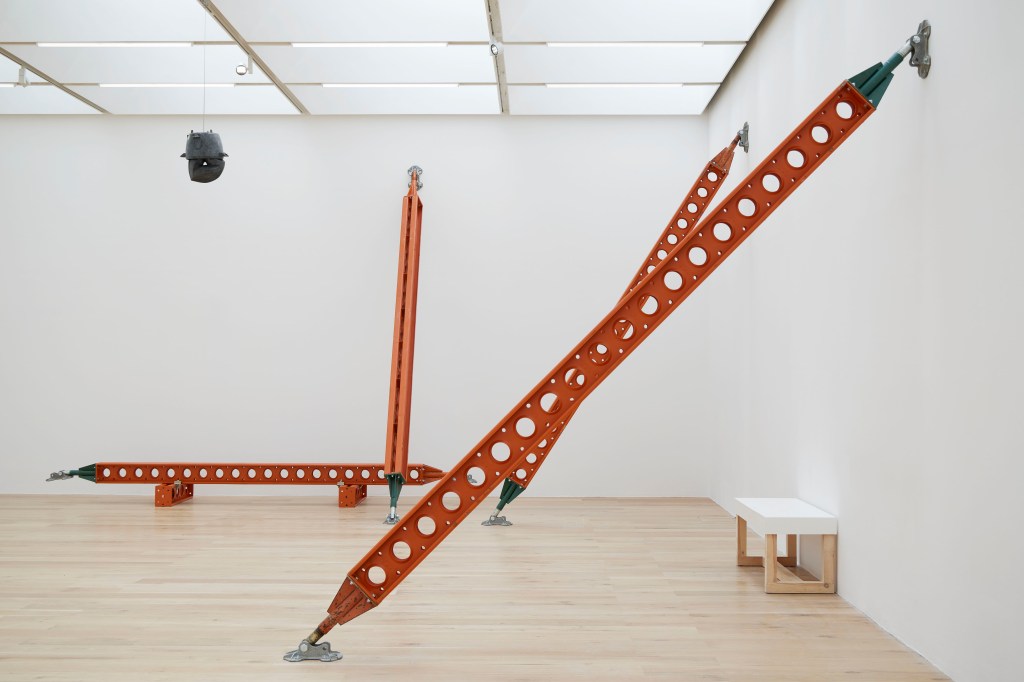
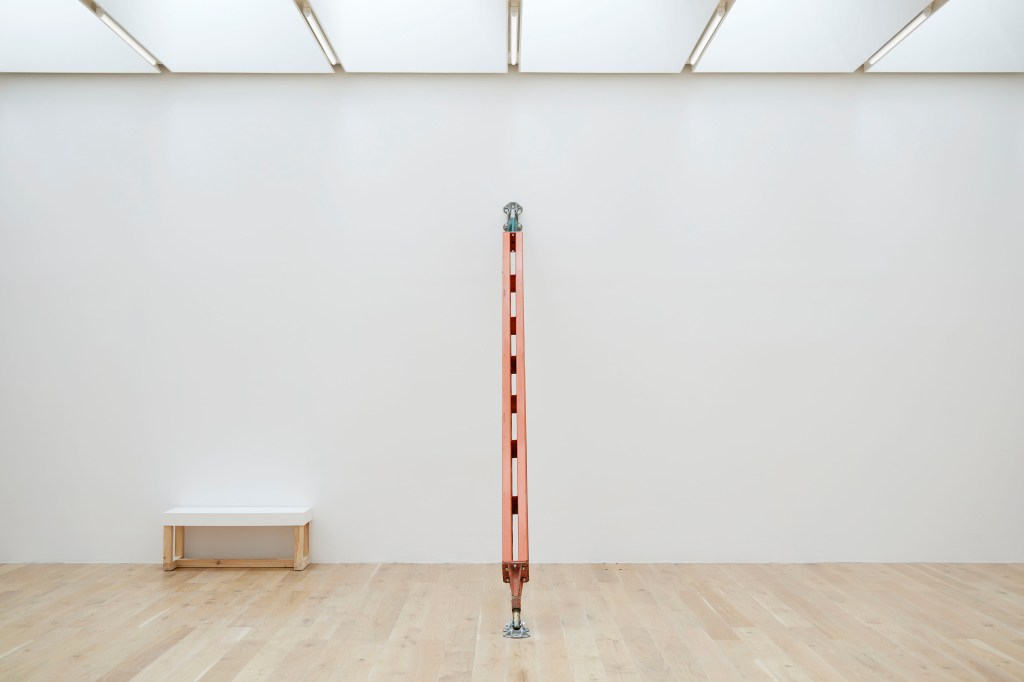
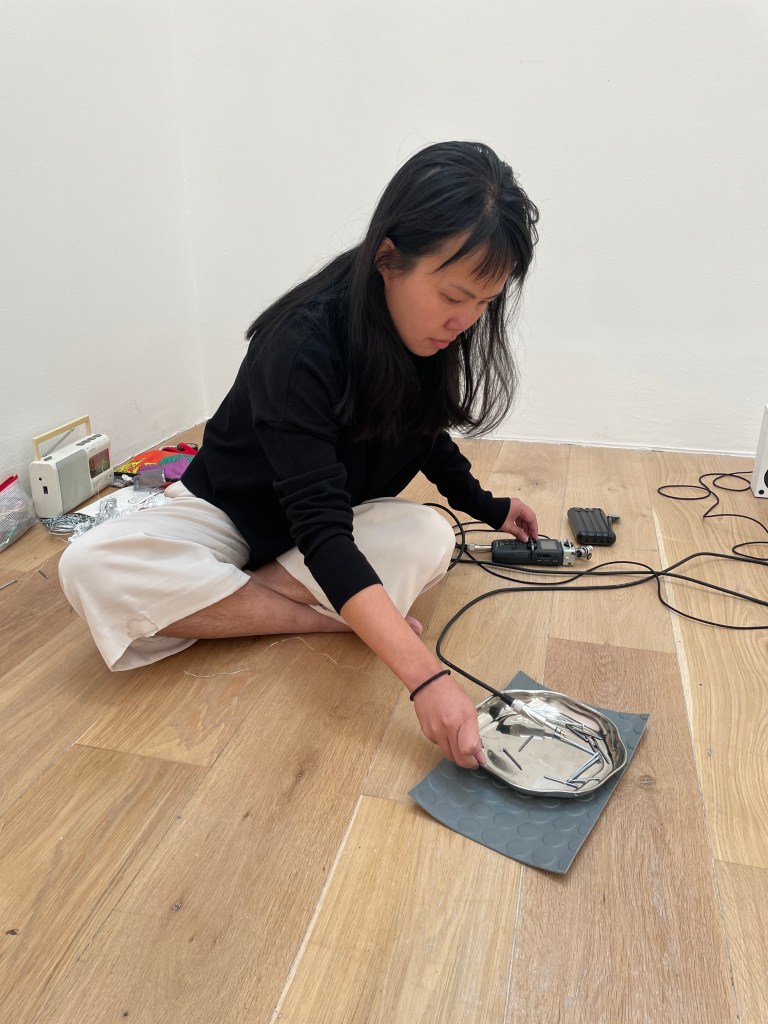
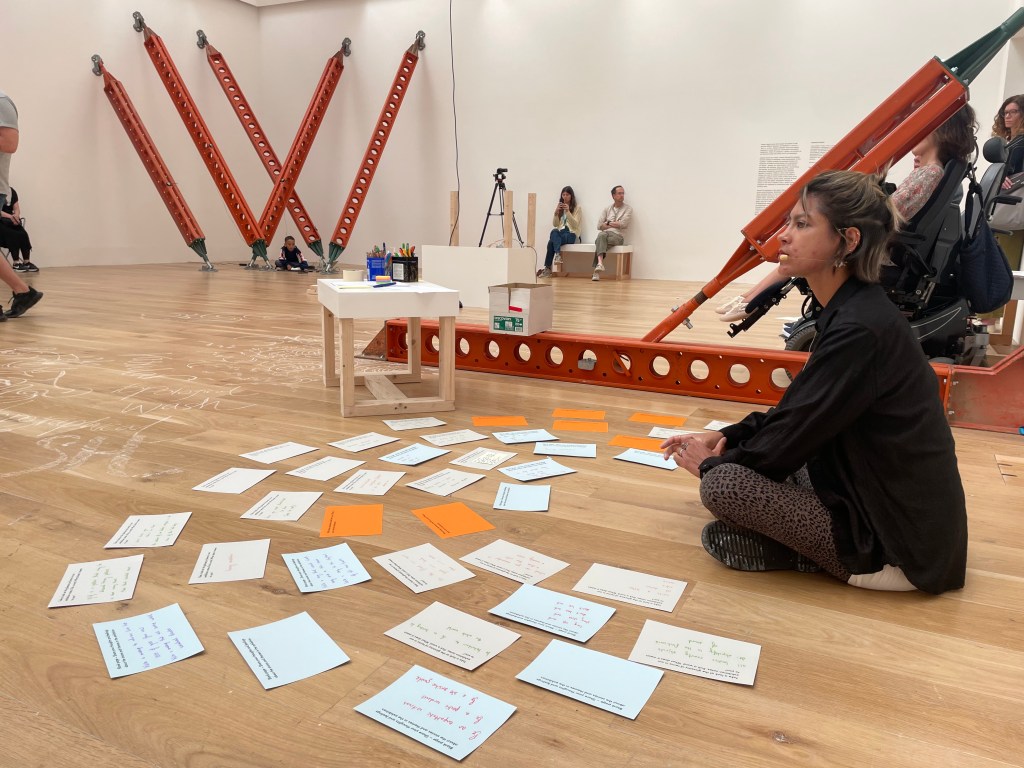
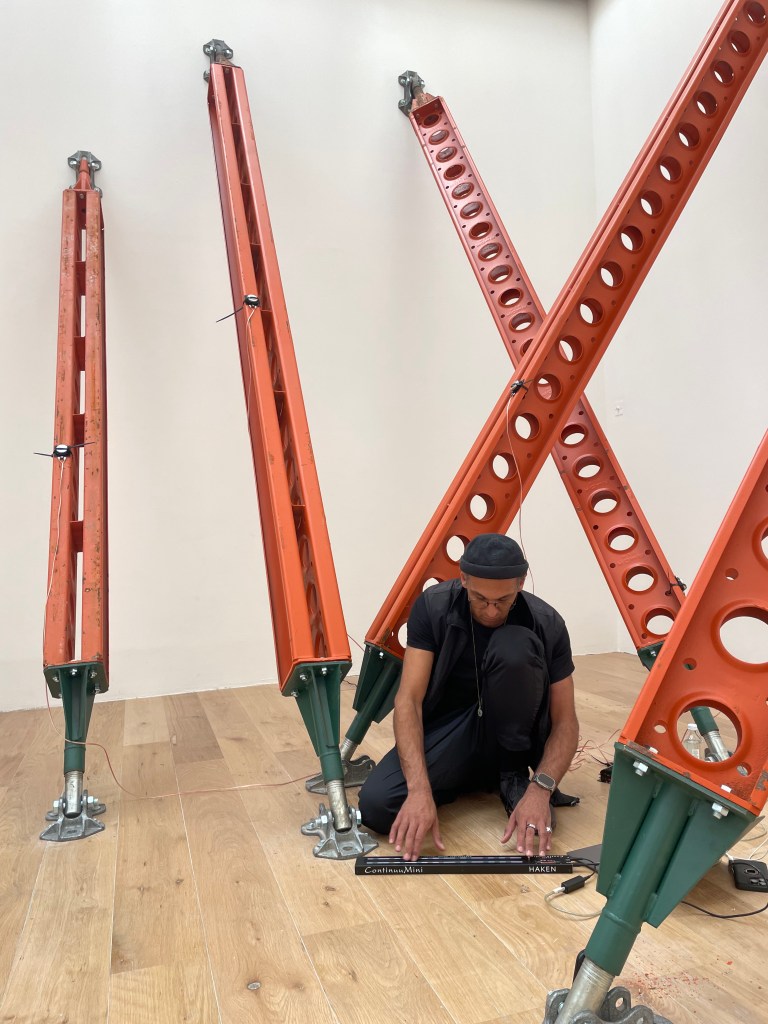
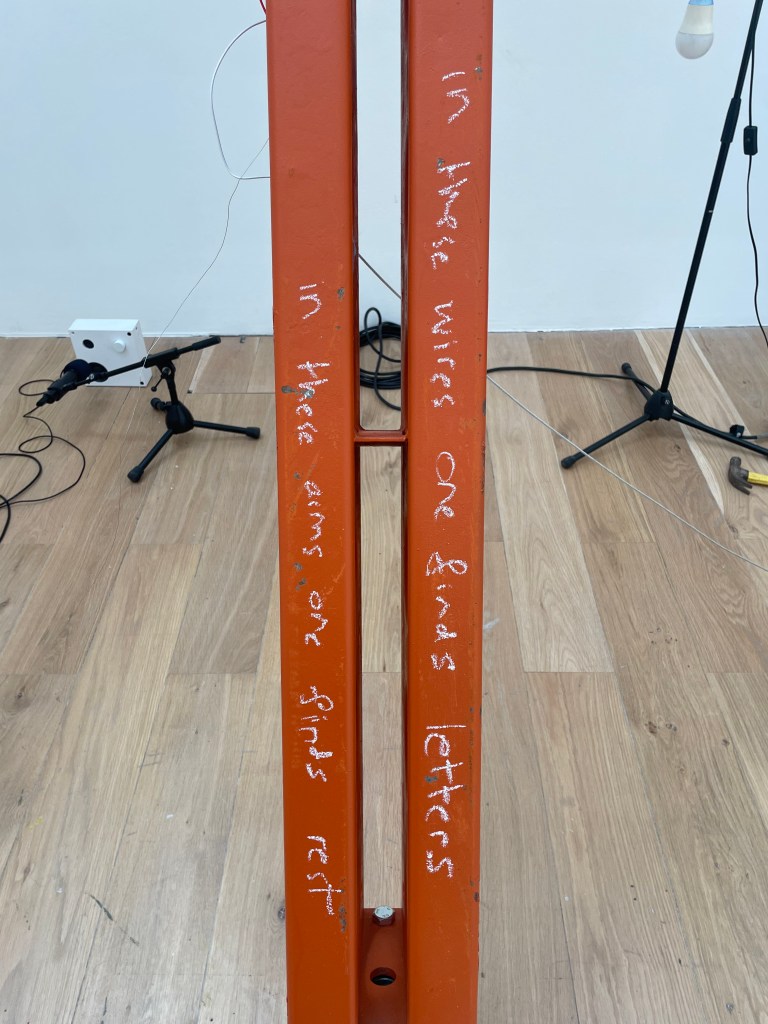
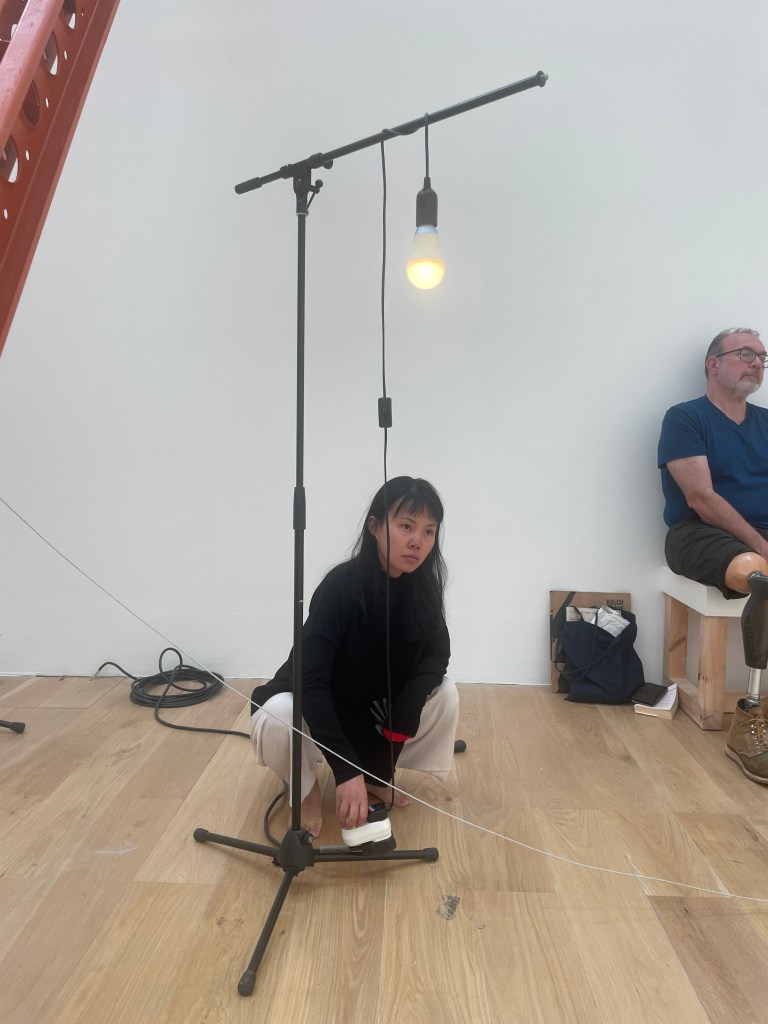
Around the perimeter of the gallery Zahedi has positioned a number of steel buttresses – heavy-duty equipment traditionally used in the construction of major building projects. Stretching from wall to floor, these industrial forms not only strengthen the gallery against external pressures, but conceptually function in a similar way to cardiac stents, which hold arteries open allowing blood to flow around the body. Here the buttresses hold the gallery open for a flow of communal moments; enabled by Zahedi through the programme of ‘How to Make’ events that run throughout the exhibition.
Elsewhere, two artworks subtly reference Zahedi’s previous projects and conceptual interventions. A green ‘PRESS TO EXIT’ button is modified to play a sound work. When pressed, visitors gain access to a non-visual space that offers an intimate moment of pause. Hung high from the gallery ceiling, a bronze cast of a work Zahedi made in 2017 for the Diaspora Pavilion at the Venice Biennial acts as a form of insurance. Should the building collapse, the work could be sold to rebuild the gallery space. In this way, it proposes another form of support: how traditional art forms have made space for conceptual forms to emerge.
Holding a Heart in Artifice encourages us to think about interdependence; how art, audiences, workers and artwork are all reliant on each other. By passing the palliative threshold of the gallery, visitors can connect to different realities and support systems, opening themselves up to cathartic and vulnerable conversation and understandings.
Artist Insights Video
‘How to Make’ Event Documentation






Exhibition Reviews
HEARTBURN?, Maximiliane Leuschner for Texte zur Kunst source
Further details on Nottingham Contemporary’s online exhibition page source
 Abbas Zahedi عباس زاهدی abbzah.com