South London Gallery, London, UK, 2020
- Exhibition Press Release
- Image Gallery
- Audio Documentation
- Exhibition Text
- Artist Interview Video
- Cassette Mixtape
- Exhibition Activation: Long Table Discussion
- Exhibition Reviews And Press

Exhibition Press Release
Following six months at the SLG as the ninth Postgraduate Artist in Residence, Abbas Zahedi presents an exhibition on the ground floor of the Fire Station.
A newly-commissioned installation includes a sound work collaboration with musicians Saint Abdullah, enacting Zahedi’s interest in lamentation rites and other moments of literal and metaphysical exit.
In his ongoing practice, Zahedi creates social projects with collaborators and audiences, often involving spiritual rituals. He has worked with migrant and marginalised communities in the UK to explore the concept of neo-diaspora, and the ways in which personal and collective histories interweave.
A cassette tape featuring a recording of the performance and exhibition soundscape will also be available to buy from the SLG bookshop from April.
Image Gallery






Audio Documentation
Exhibition Text
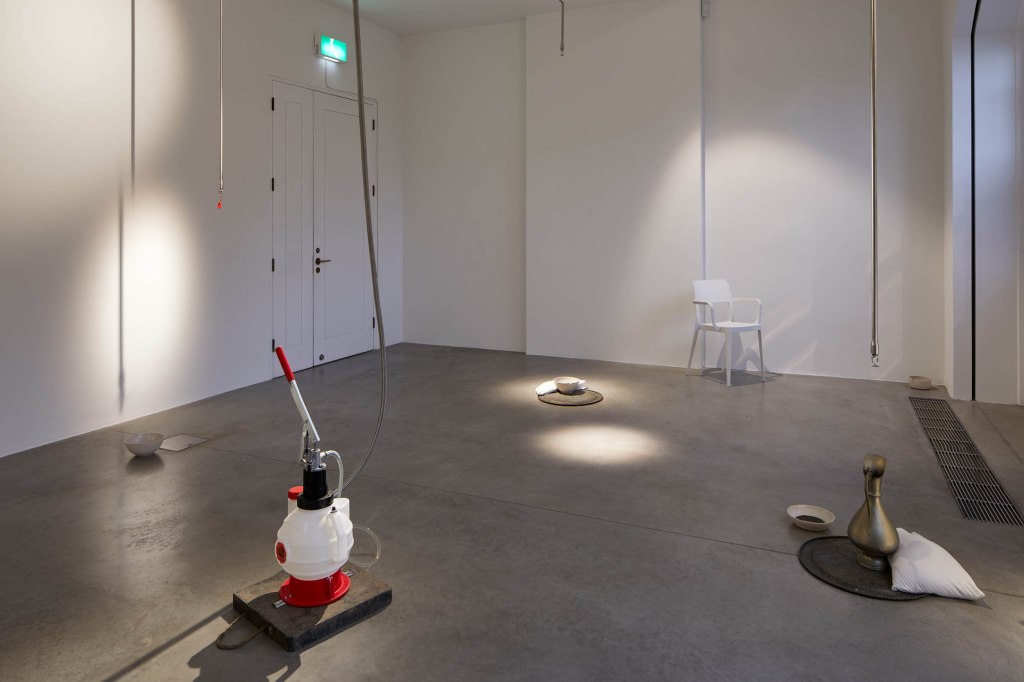
The SLG’s Postgraduate Artist in Residence, Abbas Zahedi, presents How to Make a How from a Why?, a newly commissioned installation and sound work in the ground floor gallery of the Fire Station.
In his ongoing practice, London-born Zahedi creates social projects with collaborators and audiences, often involving spiritual rituals. He has worked with migrant and marginalised communities in the UK to explore the concept of neo-diaspora, and the ways in which personal and collective histories interweave.
During his residency Zahedi has focused on lamentation rites and other moments of literal and metaphysical exit. Reflecting on the history of the building as a former fire station as well as the emotional and physical implications of ‘Resistant Exits’, Zahedi questions who can leave and who can enter, both politically and socially.1
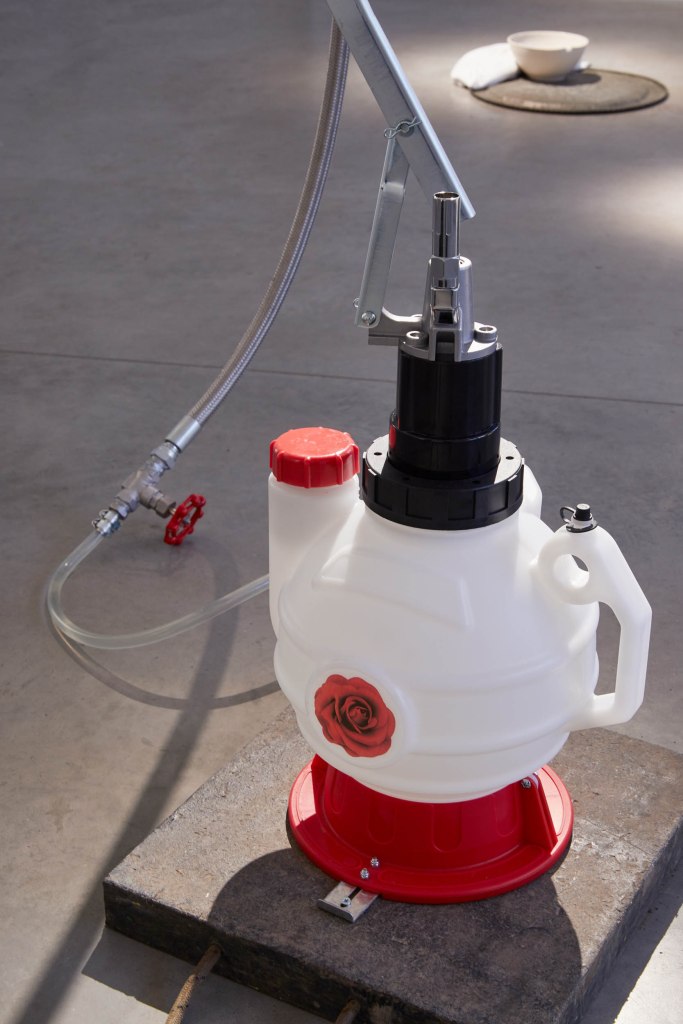
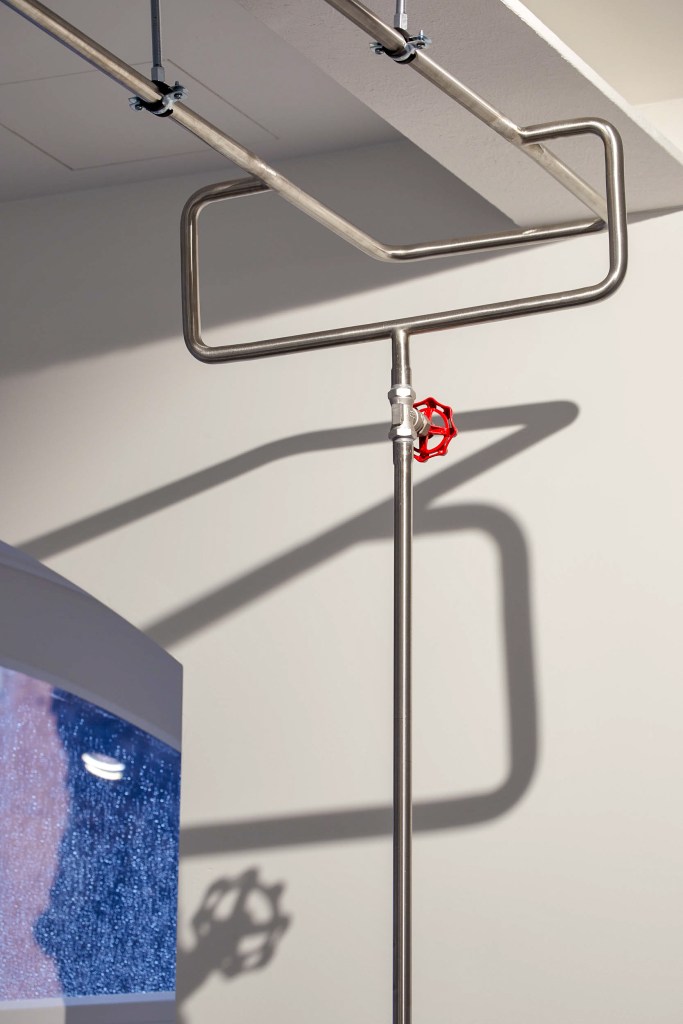
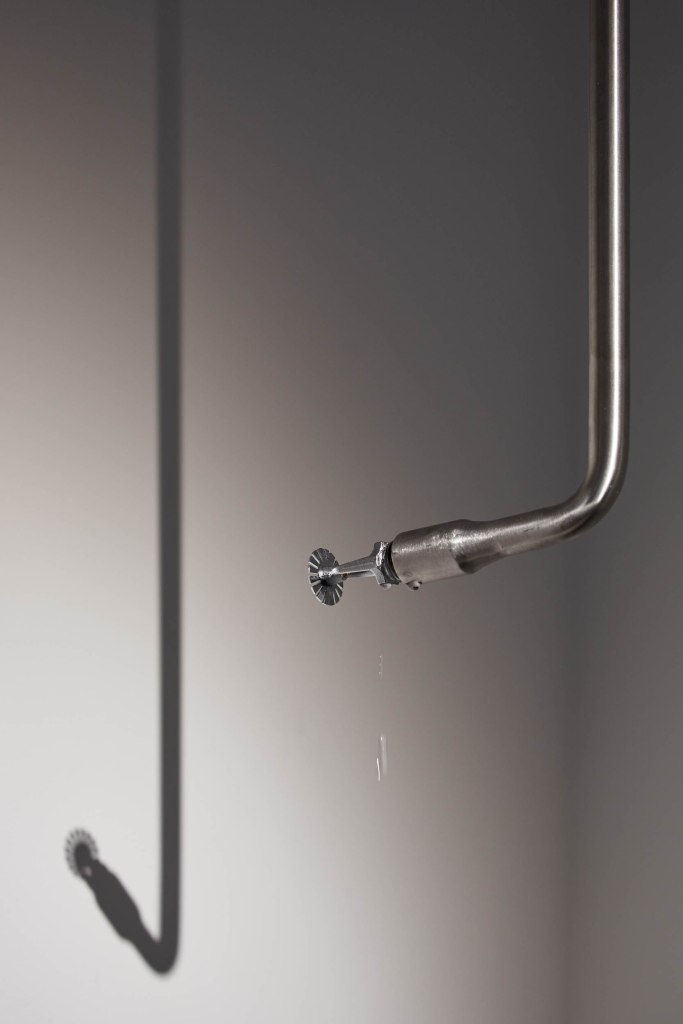
At the centre of the installation is a bespoke fire sprinkler system made from food-grade steel, which dispenses rose-infused water. Drawing on his family’s heritage of ceremonial drink making in Iran, Zahedi references rose water’s use as a beverage and commemorative libation in Iranian culture.
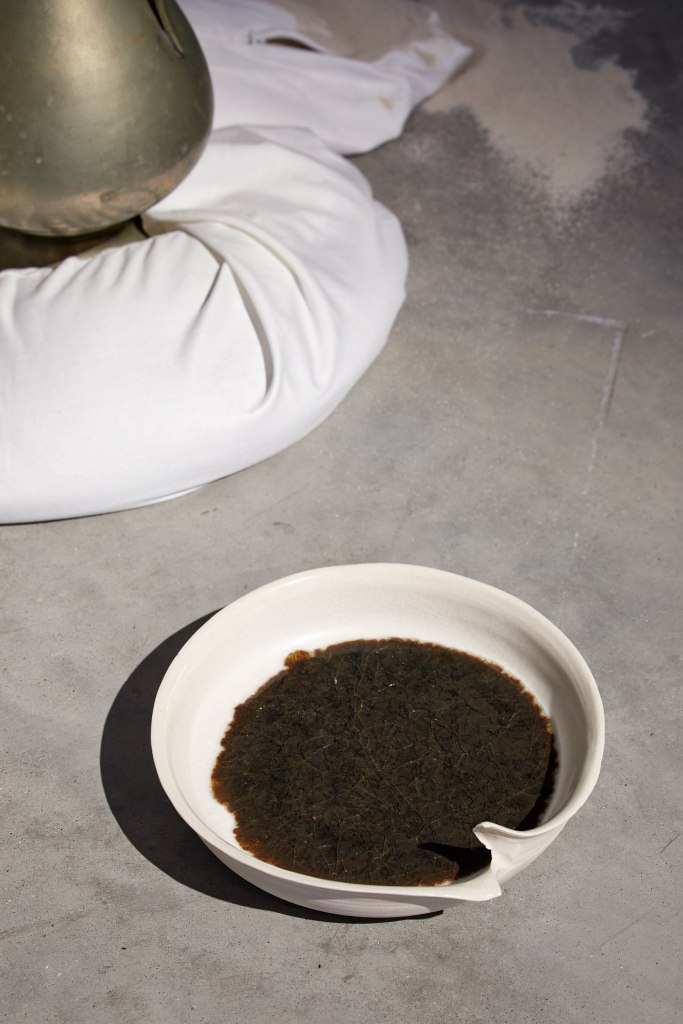
Gallery assistants pump the cistern by hand, with a view to consciously contribute to its flow, making an offering to the space. The drips from this process are collected by domestic objects, which include handwashing bowls fired with glass from shandy bottles that Zahedi previously produced in 2017 for the Diaspora Pavilion in Venice.
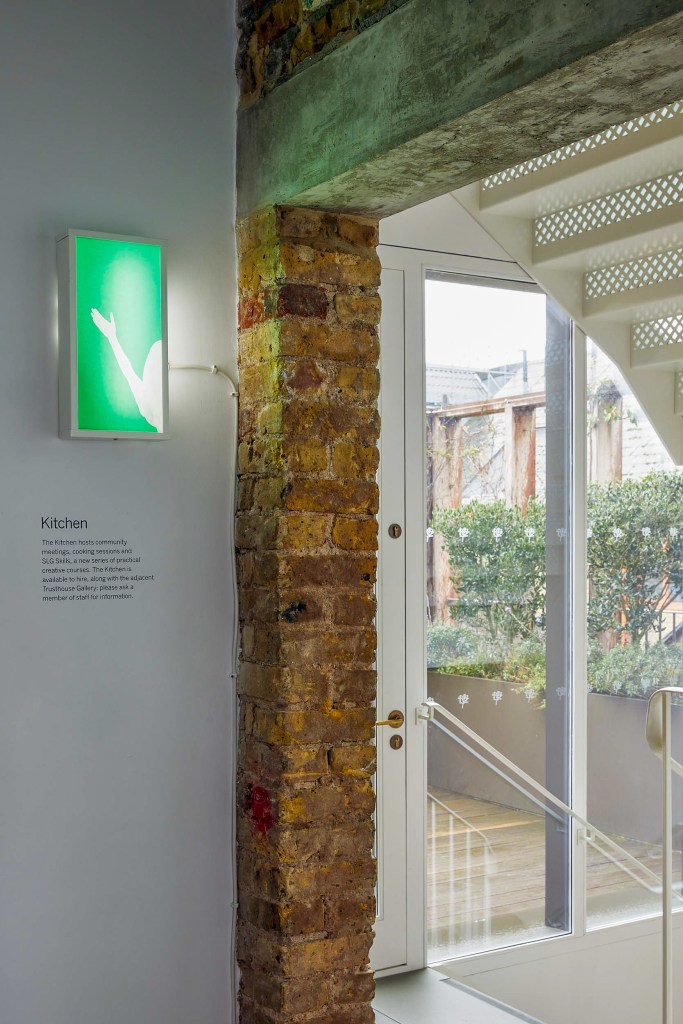
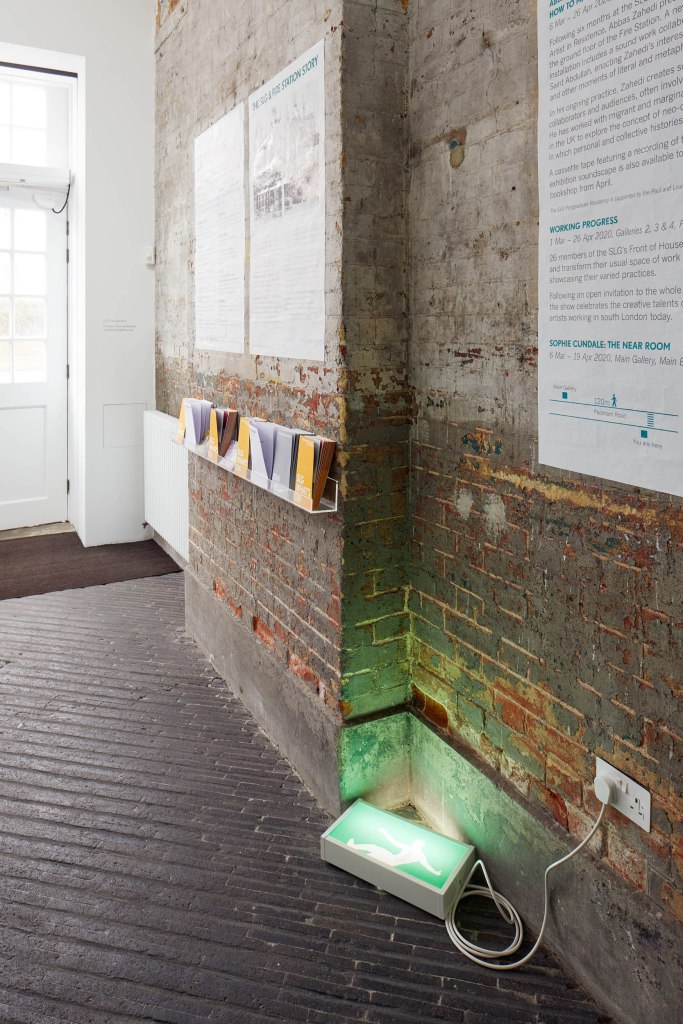
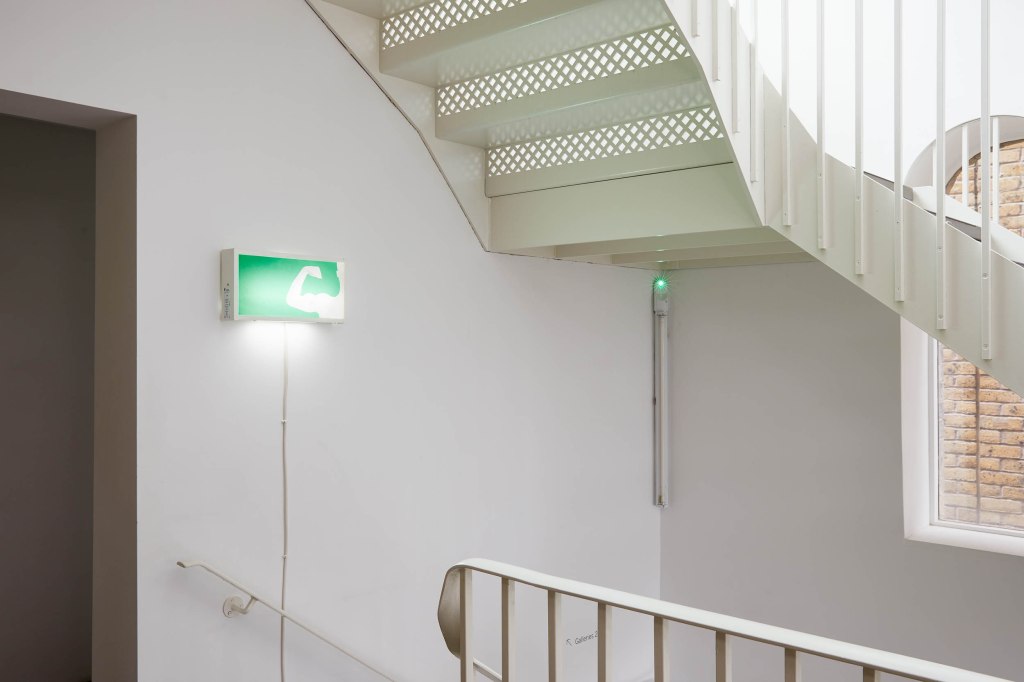
Zahedi’s reflections on historical fires and exits are directly referenced through the presence of adapted fire exit signs installed in the gallery space, and throughout the building. Photographs of a bodybuilder replace the typically static running icon. The use of these images stems from the artist’s exploration of bio-hacking, a movement that seeks to ‘optimise’ the body and mind with different technologies. Zahedi reads this movement as a mode of exit or resistance, where an increase in bodily strength serves to compensate for a lack of structural support from ones’ environment, shining a critical light on the role of self-help in an age of networked solitude. The installation calls into question the effects of making exits, enforced or otherwise, on the mental, social and financial security of an individual while simultaneously considering who has the privilege to exit at all.
An accompanying soundscape, In This Space We Leave (60 mins), produced in collaboration with New York based musicians Saint Abdullah, is played via a series of surface transducers – devices that turn any object into a speaker. In this instance, the Fire Station doors and shutters are activated, highlighting the material threshold of the gallery’s architecture. The work was created over a number of months, with the artists exchanging found sounds from Iranian field recordings, eulogies, poems and the wider media.
A version of this work will feature on a cassette mixtape, available to buy from the SLG bookshop from April.
- The use of the term ‘Resistant Exits’ draws on Jennet Kirkpatrick’s paper Resistant Exits, (see, Jennet Kirkpatrick, ‘Resistant Exit’, published in Contemporary Political Theory, volume 18, 2018) which explores the potential political impact of different definitions of exit. Her article outlined three key three political behaviours and beliefs that she uses to identify resistant exits:
- Making a Spectacle activists create a public exhibition of the exit itself that is intended to draw public attention.
- Constructing Unorthodox Alternatives groups or individuals construct alternative political organizations or modes of being in exit or exile that emphasize the failures of the political structures that were left.
- Maintaining Bonds with the Exited Group those who exit preserve solidarity with those who remain behind, and they make public-minded efforts to resist from the outside.
Artist Interview Video
Cassette Mixtape
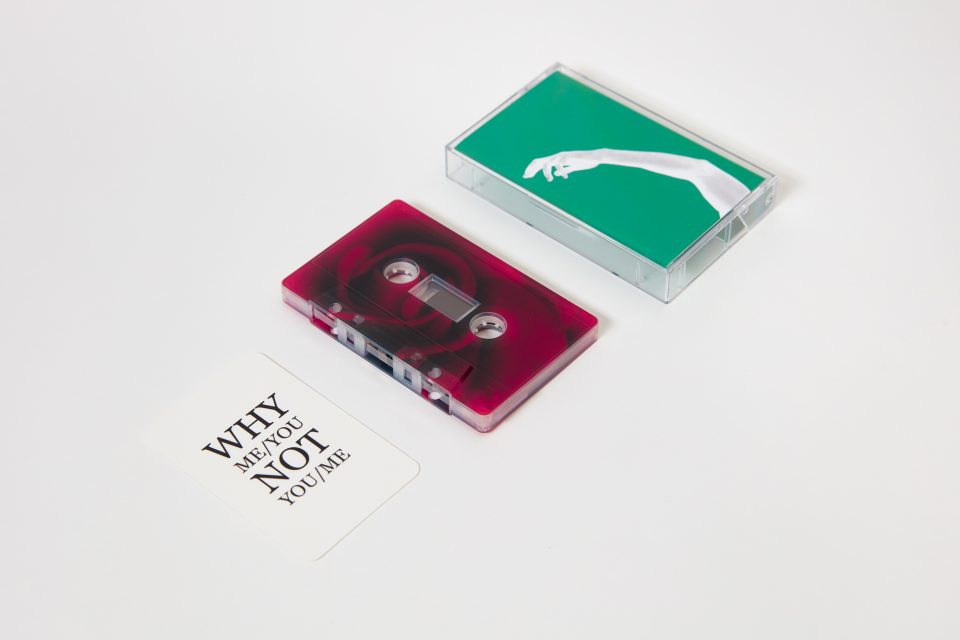
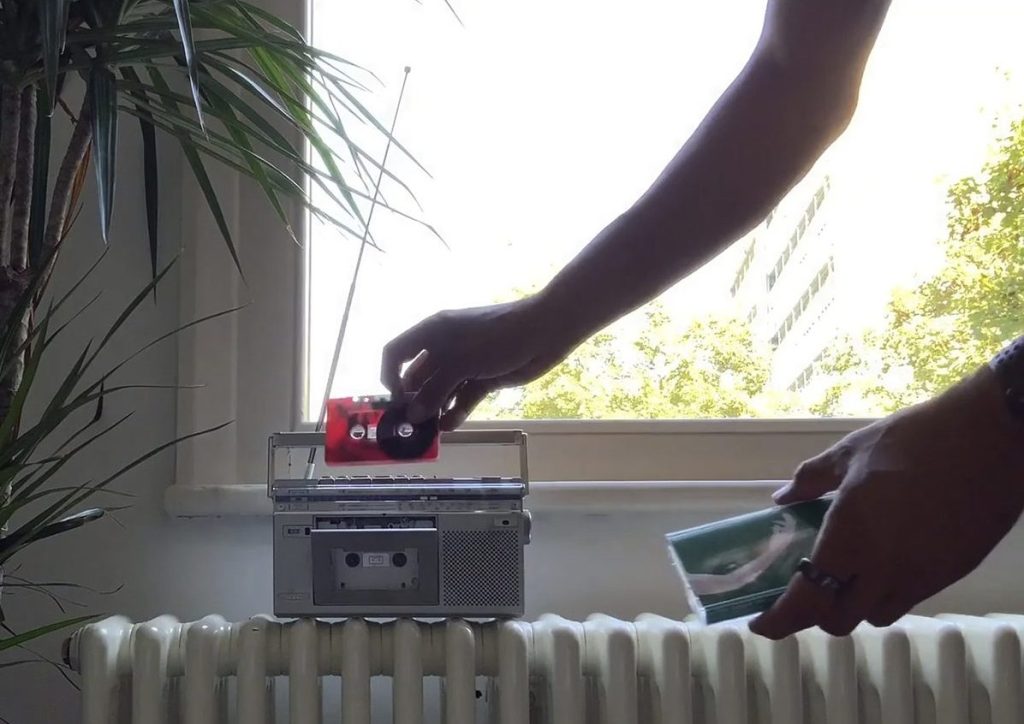
Abbas Zahedi: Abbzah & saint abdullah: in this space we leave, 2020. Edition of 200
Double-sided cassette
11cm x 7cm x 1.5cm
Edition of 200
Unsigned
This limited edition cassette has been produced on the occasion of Abbas Zahedi’s 2020 exhibition, How to Make a How from a Why? at the South London Gallery.
Abbas Zahedi in collaboration with New York based musicians Saint Abdullah have created In This Space We Leave, a double-sided cassette. The 44-minute track builds on the soundscape featured in Zahedi’s exhibition, How to Make a How from a Why?, 2020. Both sound works were created over the course of the postgraduate residency, with the artists exchanging found sounds from Iranian field recordings, eulogies, poems and other media. Reminiscent of a sonic diary, the work explores psychiatrist Elisabeth Kubler-Ross’ five stages of grief: denial, anger, bargaining, depression and acceptance. The track, much like the process of grief, is non-linear and ebbs back and forth, periodically cleansing the listening process with white noise.
Compiled by Abbas Zahedi with the sounds of Saint Abdullah. Words by abbzah. Mastered by Glyn Maier.
Exhibition Activation: Long Table Discussion

Abbas Zahedi hosts a Long Table discussion that considers approaches and attitudes towards expressions of grief and grieving through the process of lamentation.
The discussion raises questions that include:
- What does it mean to lament?
- Do we need to find new ways to process grief as a collective?
- How do we deal with loss in the digital age?
- Is lamentation helpful in exploring the limits of language?
During the evening, participants can choose to come to the table to join the conversation. Participants can leave the table and re-join as desired.
Collaborators invited by the host will also contribute to the conversation.
Zahedi recently attended a Long Table event at the Wellcome Trust hosted by Lois Weaver which inspired the format of this event. He will explain the process at the start of the discussion.
Exhibition Reviews And Press
- How to Make a How from a Why?, via The White Pube source
Collaborators
Mohammad and Mehdi (Saint Abdullah), Ed Taylor (Square Root Soda Works), Iris Lin (The Kiln Rooms, Peckham).
Further information about the exhibition can be found on South London Gallery’s website source
 Abbas Zahedi عباس زاهدی abbzah.com